Showing posts with label oklahoma. Show all posts

Monday, April 18, 2016

The Oklahoman

On Friday The Oklahoman editorial board published a critical opinion of that state's Supreme Court's rulings that, so far, have declared various provisions of the 2013 workers' compensation reform law unconstitutional (Rulings Blunt Effects of Oklahoma Work Comp Reform -

The editorial board claimed that, "For decades before the law was changed, the system mostly benefited the handful of law firms that specialize in workers' compensation cases. The system was a huge burden on Oklahoma businesses, which saw their annual workers' comp rates rise through the years, even as the number of claims filed by injured workers decreased."

Advising that the state's legislature should probably take up revising it's attempt at reform sooner than later, the opinion exclaims, "In the end, though, the high court may force the
system back closer to the old status quo. As with lawsuit reform measures, the workers' comp decisions affirm the notion that legislative fixes never end a problem. They only seem to reveal another series of problems. In this case, the empire has struck back with a vengeance. The winners could be injured workers, to be sure, and their lawyers. The losers? Everyone else."

Submitting letters to the editor is limited to 250 words, and certainly I had  more to say about this editorial than 250 words would allow. Regardless, the following is my reply. I do not know if the editors published it.

*********

 Re editorial 4/15/2016:

While not from Oklahoma, I am founder and CEO of WorkCompCentral, a specialty media firm for the workers' compensation institution. We are neutral to any side other than to advocate for a healthy work comp program as it is an essential underpinning to the modern economy.

I appreciate that the editorial board, and perhaps the general population of Oklahoma, may be frustrated with the legal dismemberment of the 2013 reform, but let's be clear on one thing: if a law violates a state's constitution then it is not good for ANYONE.

Oklahoma certainly has had its share of workers' compensation frustration, but abrogating citizen's constitutional rights will not solve anything. Back to the drawing board? Perhaps.

But, you erroneously propose that the winners are injured workers and their lawyers, and that the losers are "everyone else."

If you work, you have a job. If you have a job then you, under the state constitution, are to be afforded work injury protection in the manner dictated by the legislature and consistent with the constitution.

There are about 3.9 million people in Oklahoma. Each and every one of them that works could be injured on the job at any time.


Work comp is not about just "injured workers and their lawyers." It is about every single citizen contributing to the economy, i.e., your "losers." Everyone loses when their constitutional rights are destroyed...

Wednesday, April 13, 2016

Quality Controlled


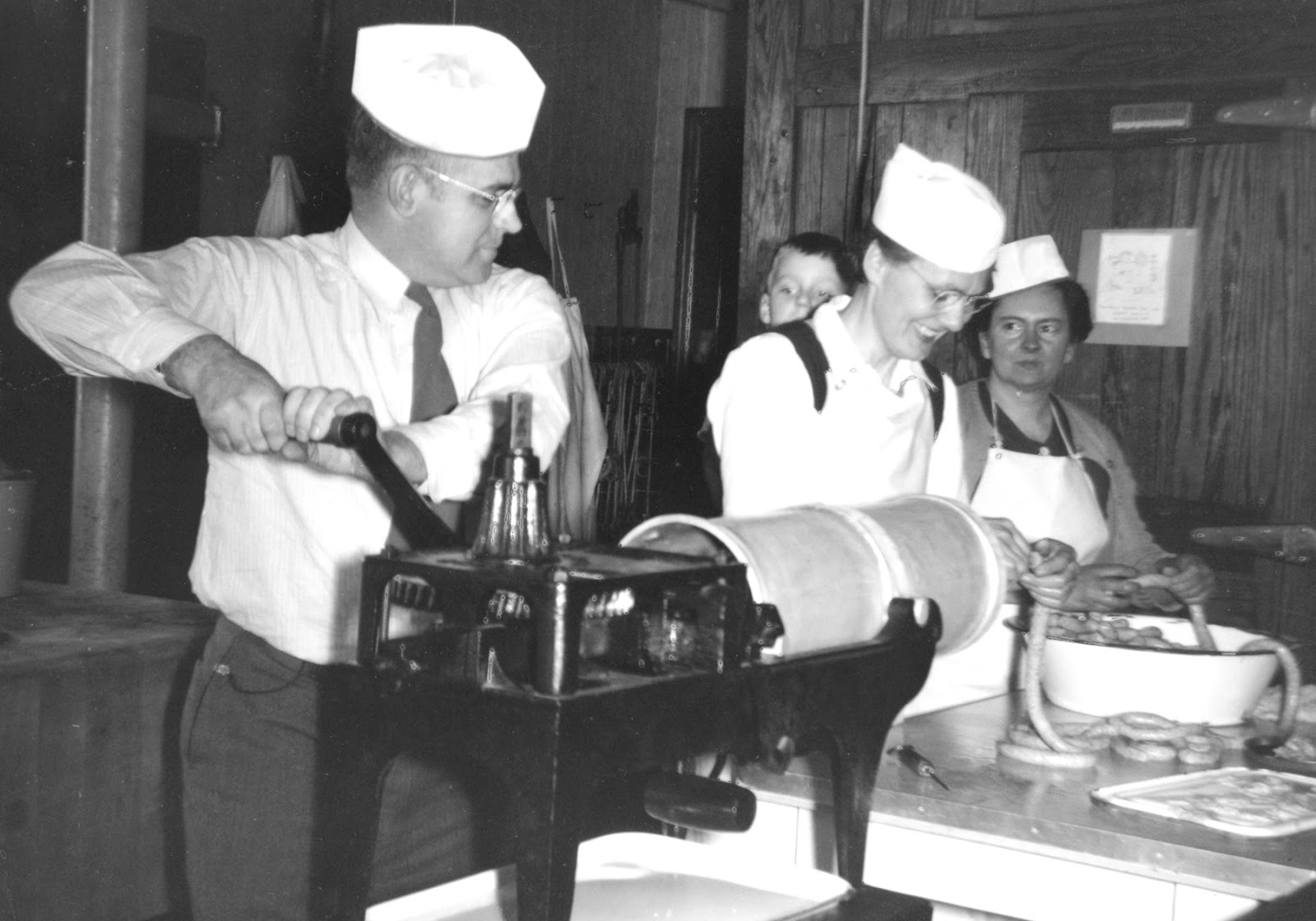
When the sausage that we call legislation is made it is subject to a quality control process. The ingredients get tested to make sure that everything is wholesome and has some nutritional value.

QC is performed by the courts. The tough part about legislative QC is that it takes real people with real cases butting against The System to get the testing done.

Someone has to get hurt to initiate legislative QC.

Lots of people have been getting hurt and performing QC in Oklahoma, and yet another declaration that the sausage isn't made of wholesome ingredients was declared by that state's Supreme Court yesterday.

There are a myriad of provisions in the 2013 Administrative Workers' Compensation Act that offend the sensibilities, but none worse, I think, than the revocation of permanent disability indemnity if the injured worker returns to work.

The Oklahoma Supreme Court sees it that way too.

AWCA Section 45(C)(5) also impermissibly "creates a subclass of employees subject to differential treatment" depending on whether the employees were able to return to work, the court said.

In addition the court said that disability from injuries to "scheduled members" cannot be determined through the use of the 6th Edition of the American Medical Association's “Guides to the Evaluation of Permanent Impairment.”

But the bigger part of the ruling is the court's disdain for disparate treatment among workers with regards to permanent partial disabilities.

The court said Section 45(C)(5) was unconstitutional. That statute provides that the amount of a worker's PPD award shall be reduced by 70% of the average weekly wage for each week he works in his pre-injury or equivalent job.

The court's rationale is that injured workers have a vested property interest in an award of PPD, and "these benefits replace something the employee lost for which the employer is liable." But with Section 45(C)(5), "the monetary award based on the physical disability rating to the employee's body becomes meaningless once the employee returns to work," as the statute allows for the award to be depleted if the claimant works long enough.

The court further said there was no valid reason to treat workers who are able to go back to work differently than workers who cannot.

Two justices dissented in part, on the grounds that if one provision of the AWCA is unconstitutional (indeed, it's turning out that much more fails QC testing) then the entire act is because everything is interwoven.

In other words, like a Federal Food and Drug Administration enforcement act, the entire batch of sausage needs to be recalled.

By the way, one commentator to the WorkCompCentral story on the case said that the "employers who are effectively held at gunpoint by the attorneys throughout the state at the mere 'claim' of a workplace injury" are the big losers because attorneys are paid contingent on the amount of disability.

Simple resolution - come up with a payment system for lawyers dedicated to protecting those hurt at work based on something other than a disability outcome. Failure to do otherwise simply reveals hypocritical bias (and dismisses the lawyers dedicated to a cause rather than a pay day).

To read the court's decision, click here.

To read the dissent, click here.

Friday, March 11, 2016

Irrational Argument

The first day of the Workers Compensation Research Institute's annual conference was chock full of data, statistics and information about cost shifting, medical fee-based incentives, and independent medical review.

But to me, the most interesting of day one of the conference was the two separate sessions dedicated to debating "opt out," the latest pet phrase for alternative work injury protection systems.

The first debate was between Bill Minick of PartnerSource, and Trey Gillespie of the Property Casualty Insurers Association of America.

Minick is one of the major proponents and drivers of opt out. He and his firm are, consequently, lightning rods for opt out criticism, including loud denunciation in the general media such as the ProPublica story on the issue.

Gillespie is a Senior Workers Compensation Director for PCI, and has been strongly critical of the opt out movement.


Their debate was predictable. Gillespie interposed doubt about opt out's intent, and the threat it posed to the Grand Bargain, saying it would destroy people, companies and communities. Minick, of course rebuked those allegations, citing facts, statistics and anecdotes about how opt out can be a sensible, reasonable alternative to traditional work comp for both employers and their workers.

At the end, though, Gillespie pointed out a number of attributes that "a responsible alternative" to work comp would look like, stating for the first time I recall publicly that PCI is not opposed to alternatives if those objectives were met.

Frankly, I thought that was a huge capitulation on the part of Gillespie and PCI.

The bigger debate, though, came in Round Two where a panel comprised of James Mills from the Oklahoma Department of Insurance, attorney Alan Pierce, president of the Workers' Injury Law and Advocacy Group, Elizabeth Bailey,VP Workers' Compensation & Safety of restaurant chainWaffle House Inc., and Bruce Wood, VP & Associate General Counsel with the American Insurance Association. 

The arguments were heated, and in my opinion, curiously hypocritical.

And this is why - all of the arguments against opt out are largely based on just a couple of basic points: there are unreasonable potential restrictions that cause cost shifting and the injured worker gets shafted.

Frankly, those are the same arguments that the general media, and other critics, have been saying about traditional workers' compensation.

Think about it - work comp has been under fire the past few years on the argument that reform measures in various states have eroded benefits and protections for injured workers to such an extent that several states are facing constitutional challenges to their systems.

The opponents to opt out are making the same arguments against the movement that everyone else has been making against traditional work comp!

Limitations on temporary disability duration and the number of chiropractic or physical therapy visits, devaluation of permanent disabilities, restrictions on medical care, fee schedules, utilization guides, constrictions on causation liability, comorbidities, disputes, litigation, etc....

And in the end there is the injured worker, left without much remedy to overcome the financial consequences of a work place injury or illness while, in the meantime, vendors siphon money away for utilization review, bill review, pharmacy review and pretty much any other kind of review you can think of...

Bailey was, perhaps, the most rational and level voice of the entire debate. The Waffle House operates in 23 states where it is either self insured or has a high deductible program. The company employs 40,000 "associates" (see my post of yesterday, "The Culture") 2,000 of whom are in Texas.

In Texas, the Waffle House opted out in 2002 because costs were out of control and they saw no viable way to curtail their costs. Bailey said that the company's costs were driven by very high medical charges but that no one was ever getting better. 

They have stayed with opt out in the state because they saw huge improvement in communications with their "associates" because it was forced - they had to do it under ERISA law, and found that in fact it returned huge benefits and trust with employees. As a consequence the company experience a big reduction in indemnity because of the change in CULTURE.

In other words, opt out in Texas forced trust between the company and its workers.

Trust - oh yeah, a concept that seems to have escaped traditional workers' compensation.

By the way, Bailey also said that they are not opting out in Oklahoma, at least not yet. That environment is too unsettled at the time and the company is waiting to see how both systems turn out.

So, here's the message - it doesn't matter how you provide work injury protection. Employers that are good people will ensure that their workers are taken care of because they understand that human assets are the most important part of a business, and those that don't ... won't.

This basic truth transcends through the insured market. There are insurance companies that will do the right thing, and of course there are those that won't (e.g., how many carriers do you know that will voluntarily pay temporary disability beyond the statutory cap, or don't dispute statutory presumptions in order to curtail long tail liability on cancer claims?).


What I learned - it really doesn't matter if work injury protection is based on traditional work comp or opt out or some other program. It all comes down to whether the employer and/or carrier is going to do the right thing, and that comes down to how workers are valued, and the culture of the company, its insurer and the system within which it all operates.

 Trust operates in mysterious ways.

Wednesday, March 2, 2016

Spotlight Oklahoma


Oklahoma is probably the least likely state one would imagine to be the epicenter of workers' compensation controversy, but since the state did a "reform" which drastically altered some qualification for benefits as well as introducing an opt-out program, the state has been embroiled in dispute.

Last week, of course, the state's Workers' Compensation Commission declared opt-out to be unconstitutional, failing the state's guarantee of equal protection.

The commission said in Vasquez v. Dillard's that the state's opt-out program failed constitutional muster because it subjects workers to differential treatment depending on whether their employers are subject to the Oklahoma Employee Injury Benefit Act or the Administrative Workers' Compensation Act.

Yesterday the state's Supreme Court issued a 50 page ruling striking a provision of the 2013 reform that bars cumulative injury claims filed within the first 180 days of employment.

The Court in Torres v. Seaboard Foods said the cumulative trauma restriction groups together employees who legitimately incur a CT injury in their first 180 days of employment with workers who file fraudulent claims, “lumping together the innocent with the guilty.”

“On the other hand, if one of the purposes of workers’ compensation is to provide statutory compensation for employees actually suffering an injury arising out of the course and scope of employment, then the statute is under-inclusive because it fails to include employees actually injured during the first 180 days of employment,” the opinion states.

There were two concurring opinions that were more inflammatory - essentially calling into question The Grand Bargain and declaring Oklahoma's workers' compensation laws now critically out of balance, favoring business too much, and giving workers too little.

Justice Colbert, joined by Justice Watt, in a concurring opinion said, "the balance [in the Grand Bargain] is now off kilter and has become one-sided to the benefit of the employer", and that "The Administrative Act abrogates an injured employee's bargained remedies, and at times, leaves the employee bereft of any legally cognizable recourse."

In another concurrence, Justice Combs wrote, "By cutting off all recovery for an injured worker, excluding them from both workers' compensation coverage and from filing a tort claim, the Legislature has violated the grand bargain and betrayed the fundamental principles of justice that gave rise to it in the first place."

The state Chamber of Commerce is dismayed, telling WorkCompCentral they are "disappointed" though reviewing options.

The lead attorney in all of the constitutional challenges, Bob Burke, has been prolific in filing appeals and communicating with community, sending email status updates and blogging regularly about Oklahoma workers' compensation nearly since the day after Senate Bill 1062 was passed.

He says the state Supreme Court "spoke volumes" about the 2013 reform.

I think Burke is right.

We certainly don't know what the Court will do with the Commission's opt-out opinion.

Though the Commission went through details to explain how it gained jurisdiction over a constitutional issue, generally administrative agencies don't have such power - but regardless, the case is now before the Supreme Court by the Commission's own action.

And it seems to me the Court is anxious to take the case on, if the Vasquez case is any indication.

Oklahoma isn't just a test of opt-out. It's really a test of just how far "reform" can go without offending The People. 100 years of Grand Bargain culture is difficult to erase with a governor's signature...

Friday, February 12, 2016

The Supremacy Clause

The Supremacy Clause in the United States Constitution dictates that federal law takes precedence over state law.

Article VI of the U.S. Constitution which dictates that federal law is the "supreme law of the land," which has been interpreted to mean that the courts in every state must follow the Constitution, laws, and treatises of the federal government in matters which are directly or indirectly within the government's control.

Under the doctrine of preemption, which is based on the Supremacy Clause, federal law preempts state law, and a federal court may require a state to stop certain behavior it believes interferes with, or is in conflict with, federal law.

The federal Employee Retirement Income Security Act sets standards for private-sector “employee welfare benefit plans.” It defines an “employee welfare benefit plan” as any program established by an employer to provide employees with medical care or benefits in the event of sickness, accident, disability, death or unemployment.

ERISA is at the heart of opt-out.

ERISA provides plan participants with a civil cause of action to enforce or clarify their right to benefits, and allows an employer to remove such disputes from state court tribunals to the federal trial court system.

In Texas, which as we know does not compel workers' compensation participation, this has never been a big issue - the argument was settled long ago that non-subscribers with alternative work injury protection plans go to federal court for those matters that ERISA says can not be the subject of arbitration.

But in Oklahoma, which compels employers to provide some form of work injury protection, either via participation in the state work comp program or via an approved opt-out scheme, the matter is not settled.

The Oklahoma Employee Injury Benefit Act requires employers who opt out of work comp to create plans for their employees that provide the same form of benefits as those included in the Oklahoma Administrative Workers’ Compensation Act.

One of those benefits is access to the dispute resolution process created for work injuries, and the 2013 law also created a new system (which, by the way, was opposed by the state's trial lawyers - interesting how things turn around...) to hear those disputes creating an administrative review process followed by appeals into the civil courts.

That obviously conflicts with ERISA.

Dillard's department store chain, one of the first to opt out of Oklahoma workers' compensation when it became available, tested preemption but lost the argument that work injury disputes under its plan belong in federal court last September.

In that ruling, U.S. District Court Judge Stephen Friot said that such appeals have to go to the Oklahoma Workers' Compensation Commission because ERISA contains an exclusion of its coverage for any employee benefit plan maintained solely for the purpose of complying with a state's comp laws.

Friot remanded the matter back to the commission.

Dillard's is asking the commission to send the case back into the federal judicial system, filing a motion asserting that it doesn't have jurisdiction due to federal preemption, because its plan is not SOLELY for the purpose of workers' compensation but covers non-industrial benefits too.

The case won't end at the commission. Representatives for the parties on both sides have indicated commitment to see the issue through to the state supreme court.

Workers' compensation is a creature of the legislature. As we all know, what the legislature giveth, the legislature can taketh away, and in most states, legislatures can do pretty much whatever they want to do with work comp because of its statutory nature.

Can a state legislature buck the feds? Even if not sanctioned by the federal government, many states just go about their business regardless of federal law - the marijuana movement is recent evidence.

It may be that these cases end up before the United States Supreme Court at some point down the road. Or maybe not - that's many years, and a lot of money, to get there. But if there was any test case for the Supremacy Clause, the Oklahoma dispute is a prime example.

Oral argument before commission is scheduled for Friday, Feb. 19, at 9 a.m.

Wednesday, January 13, 2016

The TTD Gap


Last month I pointed out a Missouri Supreme Court case that I thought highlighted why states have been imposing artificial limitations to temporary total disability status; there are some who never seem to get better in order to enjoy the higher indemnity payment of TTD.

But the problem is that artificial TTD limits ensnare folks who face a change in medical condition and legitimately are TTD, but the law doesn't recognize that exception creating a huge financial hardship on the injured worker and his/her family.

Oklahoma has been a hot bed of appellate litigation since "reform" a couple of years ago, and the issue of a "gap" being created as a consequence of TTD limits has been thrown to the state Supreme Court.

Darla Jean Camp had worked for Atwood Distributing, the operator of a farm and ranch supply store in Enid, Oklahoma. She suffered an admitted, compensable soft tissue injury to her back and hip in March 2014.

Section 62 of the Oklahoma act generally limits TTD compensation for soft tissue injuries to eight weeks, but it provides for an additional eight weeks of benefits if the worker receives injections as treatment. It also permits an administrative law judge to award up to 16 more weeks of benefits if a worker winds up needing surgery.

Since Camp received injections, Atwood's insurance company, Zurich, authorized 16 extra weeks of TTD.

Camp's doctor later determined that she would need hip surgery. The Administrative Law authorized the procedure and awarded an additional 16 weeks of TTD payments.

Camp had hip surgery last July. She then filed a request for more TTD, to compensate her for the entire period of disability between the date of her March 2014 accident and the July 2015 surgery.

Zurich objected, contending she had already received the maximum 32 weeks of benefits under Section 62.

The ALJ found Atwood was entitled to an additional 36 weeks of TTD. He opined that Section 62's cap applied only to "nonsurgical" injuries, and since Atwood had surgery, Section 45, which caps a worker's entitlement to 104 weeks of TTD, controlled.

Zurich appealed, citing a 2012 case from the Court of Civil Appeals called Scott v. Sprint PCS for the principle that statutory TTD caps for nonsurgical injuries will still limit a worker's entitlement to TTD even if the worker undergoes surgery, for the period up until the surgery.

The Scott case pre-dates the Administrative Workers' Compensation Act, but the 2009 law it was applying contained a restriction on TTD for soft-tissue injuries that is virtually identical to what exists now in Section 62.

However, the commission found the Scott case was not controlling on Camp's case. The commission said the court in Scott had been concerned with the legislative intent to encourage workers to not delay a surgery if surgery is necessary, and there was no indication of delay on the part of Camp.

The commission focused its analysis on the plain language of Section 62 instead. It concluded that Section 62 permitted the TTD restriction to be lifted once surgery is performed, because Section 62 specifically applies only to "non-surgical soft tissue injuries."

Obviously, the commission said, "once surgery has been performed, the soft tissue injury is no longer 'non-surgical.'"

The commission concluded that "a compensable 'surgical' soft tissue injury" is still subject to the limits of Section 45, but as long as the worker is unable to work after an injury, the worker is entitled to TTD benefits for up to 104 weeks, which would mean Camp would get an additional 68 weeks of benefits for TTD status both before and after surgery.

In its petition for review to the Supreme Court, Zurich maintains that a worker's surgery cannot somehow retroactively "transform an injury" and remove it from limitations for soft tissue injuries contained in Section 62.

To read the commission decision, click here.

Zurich's petition for review is here.

Camp's response is here.

Camp's motion for the court to retain jurisdiction is here.

Tuesday, November 24, 2015

Return To Trust

Even more so than most other systems or industries, trust is paramount to the credibility of workers' compensation.


There are so many different moving parts to workers' compensation - from funding to administration to execution, enforcement and delivery - the big circular revolution of the system from origination to repatriation back into the economy requires a high level of trust between a lot of parties with disparate interests to make it work.

Government plays a big part in the trust circle. Government sets the rules. Government is to enforce the rules, and make sure everyone plays fairly. And government has to be particularly careful about conflicts of interest, or appearances of impropriety, since it is in such a central, and powerful, position.

Trust in government can be shaken to the core when allegations of wrong doing are tossed around.

Part of the turmoil that has surrounded Oklahoma's two-year old reform law is due to lack of trust.

Not only did the state completely upend its workers' compensation system by moving to a fully administrative process, including for dispute resolution, but a new sector was carved out for employers wishing to provide an alternative to the system.

There are a couple of components that Oklahoma will need to move through as its new laws mature: allegations against the Department of Insurance that it "rubber stamps" alternative plans presented for approval with dubious analysis of equivalency to the state's work comp system; and allegations of inappropriate behavior by former executive director Rick Farmer.

Most recently, State Auditor and Inspector Gary Jones issued an audit report released Nov. 18 concluding the agency's “internal controls do not provide reasonable assurances that revenues, expenditures or inventory were accurately reported in the accounting records.”

Jones says this allowed for the potential for the misappropriation of funds, illegitimate claims for payment, fictitious payroll payments or improper changes, and the mislaying of inventory.

Current executive director Kim Bailey says, “There has been no evidence of misappropriation of funds at any time," and that “there have been no allegations of misappropriation of funds with payroll.”

Most of the problems with the internal controls cited by the state auditor related to the failure to segregate posts with the same person given the job of both approving and reviewing expenditures, Bailey told WorkCompCentral.

According to Jones' audit, there are problems over the primary self-insurers guaranty and the credit letter funds. The funds pay for loss of earnings and treatment when a self insured employer is unable to pay and must contain more than $1 million.

Through picking random samples, the agency “was not able to provide supporting documentation” in six out of 16 claims from the credit letter fund and in eight of 16 claims from the self-insurers guaranty fund.

Bailey said those issues have been addressed.

A recent lawsuit filed by former employees of the agency, whom Farmer laid off in July 2014, accuse him of religious discrimination among other indiscretions.

The plaintiffs allege Farmer hired 13 people, many of them members of the Church of Nazrene, following his appointment and that they were given higher salaries than existing employees, which the filing claims Farmer referred to as the “Nazarene bump.”

The four former employees had worked at the agency for between 10 and 20 years prior to their lay offs.

Also named in the suit are the commission, the Court of Existing Claims, and the present and former chairmen of the commission, Robert Gilliland and Troy Wilson.

The complaint alleges that a “lack of funding” was given as the reason the commission laid off 16 employees late last year. Farmer, however, hired approximately 13 new employees following the commission's creation on Feb. 1, 2014 (just over four months before the firings),” the complaint says.

None of the newly-hired employees were terminated as a result of this alleged lack of funding, the plaintiffs state.

The state Office of the Attorney General is defending the commission against the court.

There's an old saying: trust takes years to build, seconds to break and forever to repair. Bailey, the commission and the state of Oklahoma have a lot of work to do in the trust department now, making implementation of their reform even more difficult.

The distraction is unfortunate, but they'll get through it though because, "The people when rightly and fully trusted will return the trust." --Abraham Lincoln.

Monday, October 19, 2015

Opt Out and ProPublica

It's easy to vilify Bill Minick and Mellisa Tonn.

The latest ProPublica story on work place injury systems, "Inside Corporate America’s Campaign to Ditch Workers’ Comp", paints Minick as a singular vigilante intent on destroying workers' compensation by taking Texas-style non-subscription to other states; plans that are crafted singularly by employers with the intent of sticking it to the injured worker to send more dollars to the corporate bottom line.

And Tonn, Minick's wife, represents a conflict of interest because she is the medical director overwhelmingly selected by PartnerSource clients to manage medical networks and doctor selections.

But like most everything in life, not only is there another side to the story, there are many complex permutations that need to be considered, and there's a big lesson too.

I've know Minick and Tonn for many years now. It's no secret that I'm a Pepperdine School of Law alumni (1984), and so is Minick (1985). We met about a year after I started WorkCompCentral. He had started PartnerSource a few years earlier. And I've known Tonn through various professional medical organizations, namely the American Academy of Orthopedic Surgeons (of which I'm a faculty member) and the American Academy of Disability Evaluating Physicians.

I've dined with both. I've attended social events with them. I've met their children.

They are good people. They believe that what they do is the right thing for America. Both believe that workers' compensation can be improved upon, and both believe that an employer option is the way to accomplish that goal.

“All you can do is pray that the Lord gives you a calling where you can really do good for society,” Minick is quoted at the end of the ProPublica piece. “That’s what gets me up every day, knowing that I’m getting better employee satisfaction and generating economic development. That’s as good as it gets.”

Minick is not bullshitting - he truly believes what he says, and that opt-out is, overall, better than workers' compensation for both employers and workers; and also for workers' compensation by providing competition.

Remember? This is America, a capitalistic economy where, in general, competition fosters better everything for everyone, at least academically.

Fundamentally, Minick and Tonn are of a Libertarian bend (I don't know their actual political affiliations); freedom of choice and relief from regulatory burden is a paramount belief. Less government, they believe, in both business and personal lives, is better and everyone should have greater responsibility for themselves. That's what drives their business philosophy, and opt-out itself.

The ProPublica article highlights a few vignettes of injured workers getting the raw end of the opt-out deal: denials based on unreasonable time limits for reporting, failure to provide sufficient medical care to remediate long term effects of injury, inadequate indemnity to stave off pauperism.

Certainly, though, these anecdotes are no different than what is experienced in full-fledged state workers' compensation systems. The earlier series by ProPublica highlighted the great disparity in benefits between states, and the hardships experienced by injured workers facing significant changes to their lives under the controls of workers' compensation systems. That series also used vignettes that the work comp industry labeled as unfair and unrepresentative.

But no one in workers' compensation denied that those case stories were real. Nor that they represented a problem. In fact, those honest with themselves acknowledged that these negative cases are all too common, and are a big problem. That series even led to an investigation of Traveler's by California officials.

Critics of the opt-out movement point to lack of transparency - information and data about what injured workers actually experience and receive in benefits is not easily obtained from opt-out employers.

Anecdotes indicate that the reality is different than Minick's ideal that such plans aren't better for the workers.

Both are fair criticisms. Frankly, there's nothing wrong with those realities being told either. Opt-out proponents need to know those stories. They need to "experience" life as an opt-out employee who's life is shattered because the plan doesn't take care of them, regardless of whether it's better or worse than standard work comp.

Remember my rant on experiential adjusting? Same holds true for anyone involved in the medical/disability management industry, whether it's work comp, opt-out, general health, private disability - whatever. If you don't know the result on a personal basis, you aren't learning and the perception is a callous disregard for the welfare of others.

In sort of a paternalistic way, opt-out plans heavy-handedly encourage return to work. The penalties to an employee for not getting back to work as early as possible can be significant.

This is by philosophical design - the overwhelming evidence is that work is good for people, and that being off of work for prolonged periods dramatically, and exponentially, increases the likelihood of long term disability.

But this heavy-handed approach doesn't work all the time, and unfairly penalizes those unable to overcome the additional obstacles that a work injury throws in the way of, perhaps, an already difficult life. When a work injury protection plan throws up additional obstacles, such as denial of care or refusal to accept based on timing, the penalty is amplified.

Just like work comp itself.

Employers tout great savings, and these are good for the board room and SEC reports to investors. Heartless corporate America is the perception though: At what cost to society? To individuals? To vendors? To employees? To shareholders?

The opt-out employer mindset is a less-is-best viewpoint. Get the government out of the equation; take more control over who provides what, and when; put incentives (positive and negative) in place to drive behavior towards the corporate ideal; eliminate waste, fraud and dependency.

There's a lot of appeal to the concept of the opt-out movement. I'm no fan of government and bureaucracy. I'd just as soon not have others tell me what to do, and how to do it (which is why I've never worked at a big company I guess).

But this Libertarianism assumes a high level of personal responsibility. The more freedom one is provided, the greater the requirement of accountability. Some are mature enough to accept this. Others are not. And this is on a both personal and corporate level; just how greedy can one get before society is offended?

The public's perception of corporate greed is particularly acute when times are tough, or when the media makes examples of outsized executive compensation compared to the toiling working class. Class stratification has become a big source of public discontent. This is a reality that can't be ignored.

The opt-out movement needs to come to terms with this reality. Indeed, ALL of the work injury protection industry needs to.

Oklahoma's 2-year old reform, that introduced opt-out to the state, says that employers' plans must meet the same minimum benefit requirements that the state work comp system provides.

What it doesn't require is that plans meet the same procedural protections - and that is a fault that the opt-out movement took advantage of, and which has provided many of the negative anecdotes the media has reported.

Having an employer appointed doctor determine medical and indemnity fate, only to be reviewed by an employer appointed binding arbitrator, is perceptually bad. There is no check and balance in that type of a system. There is no perceived fairness. It's stacked against the employee. The working class gets stiffed again...

I believe that opt-out can work. But ONLY if it is a fair, and BARGAINED-FOR exchange.

Remember the Grand Bargain? There WAS a bargain 100 years ago. First there was fighting, name calling, shouting, discord... and eventually compromise was reached. That compromise has been challenged over and over again and the first set of the ProPublica series simply pointed out that perhaps the bargaining in today's environment isn't balanced or fair.

What the ProPublica opt-out story really shows is that government not only got out of the way, but completely failed to protect the public; government assumed that plan promoters would do so.

That's unrealistic, myopic thinking. Everyone, and I really mean EVERYONE, at the end of the day given any set of circumstances, will first act in their own self interest. All others take a back seat until the individual's self interests are satisfied. In Oklahoma, government has failed to protect the public.

What is missing in the creation of opt-out plans is simply the lack of a bargain. There is no employee representation negotiating these plans. Government (at least in Oklahoma) is tasked with looking out for the workers' interests, but they don't BARGAIN for the deal - they only approve what is presented: an employer-centric system designed by employers for employers.

“We’re talking about reengineering one of the pillars of social justice that has not seen significant innovation in 100 years,” Minick said.

That's not a bad thing. Nearly everyone that I have come across in the past few years criticizes workers' compensation as too complex, and too costly for too little - i.e. not delivering the value that we expect. So opt-out should provide the remedy.

Should...

"But as Minick’s opt-out movement marches across the country," the ProPublica story reads, "there has been little scrutiny of what it means for workers." This is a nicely written sentence that is wrong on several fronts.

First, opt-out isn't marching across the country. Texas originated it. Oklahoma adopted it after several years of legislative wrangling. Tennessee and the Carolinas are targeted - this is not a movement that is marching. However, trust me, that all of the states are watching and learning to see what is good, and what is bad. Opt-out is disruptive, experimental. But it is not marching.

Second, while there has been little scrutiny of what it means for workers, whose responsibility is that? Current opt-out plans have the fox guarding the hen-house. And as I mentioned, all of those plans were unilaterally created with no worker representation at the deal table.

Government has failed miserably at providing scrutiny. But part of the failure is also Labor's fault. Unions are at an all time low with their constituencies - they are just as out of touch with the working class as the executives on the 99th floor.

The disintermediation of labor has been accelerated with the digital age - Labor has been greatly disrupted and can no longer advocate for the working class.

So who's going to do that? Government won't and Labor can't. 

The story behind the ProPublica opt-out article is that business is running amok, but this will, indeed, eventually back fire. History has taught us that.

ProPublica states, "And it’s Minick’s handiwork that allows Costco to pay only $15,000 to workers who lose a finger while its rival Walmart pays $25,000."

That's bullshit. Minick didn't do that, his clients did it. Minick facilitated the process, certainly, but he doesn't control Costco nor Walmart. What REALLY happened is that neither Costco's nor Walmart's risk management executives made any attempt to include their workforce into the development of their plans, and that's why they are so lopsided.

Business has taken advantage of Labor's weakness and has run amok.

Don't get the idea that I'm anti-ProPublica. In my mind they have done an outstanding job of bringing to America's attention the lack of real protection that people have when they get hurt on the job.

What the ProPublica articles on work comp, and now opt-out, are saying is, the Grand Bargain isn't grand anymore because there's no bargaining.

I firmly believe that this country's strong economic engine is due in part to the work injury protection systems that are in place. When done right the employer is protected, the employee is taken care of, the economy is stable, society benefits.

When it is singularly focused, though, such systems create mistrust. Business can not run on mistrust, and eventually a revolution will be fostered that will work against the near-sighted.

Here's the lesson - ANY work injury protection plan or system MUST be an employee benefit, like health care, a 401K, time off, dogs at the office and a well stocked break room.

But they're not. The laws have ensured that workers' compensation be regarded as a compulsory expense, not as an employee benefit.

Opt-out plans have taken the same approach because their singular focus is reducing expense. This does not tell employees they are valued - rather it tells them they are a cost, and worse, an expendable cost.

And this is where the opt-out movement, if it really wants to grow and prosper and, as Minick says, reengineer one of the pillars of social justice, can work, can make a difference, and can lead changes in the way we think of work injury protection systems.

Opt-out needs to start with the mindset that it is an employee benefit just as valuable to employees as any other employment benefit.

Work comp likely will never get to that level of beneficence because the laws have put a tourniquet on both business and labor. 

But opt-out can be an employment benefit, and should be.

Fundamentally, there's nothing wrong with opt-out. But how it's executed is another matter.

Friday, October 2, 2015

No Advantages


An Oklahoma appellate court decision put a chink in the armor of one of opt out proponents' major advantage over traditional workers' compensation was the mitigation of litigation.

A big source of employer costs in Oklahoma workers' compensation - indeed in many states - is disputes and the expense of navigating through the dispute resolution system and the involvement of legal professionals.

Opt out employers use ERISA compliant agreements with their employees to steer disputes into arbitration. Many advocates for injured workers claim foul on those provisions because they claim arbitration is "rigged" in favor of the employer since the employer selects and pays the arbitrator.

Jonnie Vasquez claimed an injury last year while working as a sales associate in the women’s shoe department of a Dillard’s store in Shawnee, Oklahoma. After she was unable to obtain compensation through the Dillard’s Injury Benefit Plan for Oklahoma Employees, Vasquez filed an appeal with the Workers' Compensation Commission.

Dillard's removed the case to the District Court for the Western District of Oklahoma arguing its plan was an “employee welfare benefit plan” governed by ERISA and thus not subject to the workers' compensation system's review process.

Attorney Bob Burke, who is very active in Oklahoma arguing against that state's reform measure, SB 1062 on several grounds, took on representation of Vasquez and moved to have the matter remanded to the commission.

Dillard's objected, arguing the case belonged in the federal courts because Vasquez's claim for benefits did not arise under the workers' compensation laws of Oklahoma, and that Vasquez's challenge of the plan administrator's denial of her application for benefits was "an ERISA enforcement action claim."

Since federal trial courts have original jurisdiction over ERISA enforcement action claims, Dillard's said Vasquez's appeal of its benefits decision could be heard in the federal court.

But ERISA exempts any plan “maintained solely for the purpose of complying with applicable workmen’s compensation laws" from its coverage, and Burke argued that the plain language of SB 1062, which provides that any opt out plan must provide the same form of benefits as those included in the Oklahoma Administrative Workers’ Compensation Act, compels review by the commission once an employee exhausts that review processes provided by a plan.

U.S. District Court Judge Stephen Friot agreed.

He reasoned that the Oklahoma Employee Injury Benefit Act "is part of Oklahoma’s statutory scheme governing occupational injuries and workplace liability," and as such, "the OIEBA is part of Oklahoma’s statutory scheme governing workmen’s compensation."

Under federal law, a claim that arises under the workers' compensation laws of any state cannot be removed to the federal court system, Friot explained. Even if the Dillard's plan also qualified as an ERISA benefits plan, Friot said, the federal court system still could not take jurisdiction over Vasquez's claim.

The court's result isn't surprising. The statute is pretty clear. And opt out still has advantages to employers in that there is greater control over the provision of benefits.

The trick for employers is not to get cocky and abuse those privileges, like what happened earlier this year in Jenkins versus ResCare, Inc., where the employer denied a witnessed accident because the claim was reported 3 hours past the 24 hour notice requirement in the company's plan.

I remain on the fence about opt out. I think it can work, but I also think it can be abused, and frankly that's no different than traditional workers' compensation.

Employers demand stability and consistency. Employees demand expediency and fairness. These are reasonable demands, and aren't hard to deliver if everyone just does their job in the first place instead of trying to get an advantage over the other.

Wednesday, August 19, 2015

Opt In vs. Opt Out


The issue of alternatives to workers' compensation is volatile and emotional.

There are die-hard workers' compensation advocates and even if they disagree on whether workers' compensation is working or not, they do band together when arguing against opt-out proponents.

Those who pitch alternative benefit systems are vociferous in defending their ideals, saying the costs are lower to business, the results are better for employees, and they like that government largely stays out of the way.

I'm a firm believer in market economics. A free economy means that ultimately the consumer benefits because there's always someone around the corner that will provide goods or services better, faster and cheaper.

When "open rating" was first introduced in California around 1992 I bought in. It made sense to me that market competition would result in lower prices for insurance to the business consumer, rather than having the government dictate the least that could be charged (i.e. a floor).

What I didn't appreciate is that workers' compensation in California, nor most states, is NOT a free market; it is a captive market. The government says, with rare exception, that an employer must be covered for employment injury risk.

A free market would not impose that condition.

The only free workers' compensation market in the United States is Texas. Neither employer nor employee need "subscribe" to the system, and indeed, neither need to have any protection whatsoever, and can "go bare."

Even then, Texas had its share of problems controlling work injury issues. Until that state's historic reform in 2004, Texas employers suffered higher than average premiums for workers' compensation insurance. Bigger businesses could afford to put together alternative benefit plans, but small businesses with fewer resources weren't as able to adapt.

A few suffered the consequences...

The opt-out movement has been heating up with moves into Oklahoma and Tennessee, and it is being pitched at other states.

There are two issues that opt-out opponents really have to alternative systems: 1) disputes are governed by arbitration clauses and the employer controls that process, putting the employee at an unfair disadvantage; 2) when employment ends, so too does the employer's obligation to take care of the injured worker.

Neither of those are trivial, in my mind.

The employer for the most part has an unfair bargaining advantage over most workers - employer has the money, employee needs the money... And most employees don't think they'll ever get hurt at work. And even if they might appreciate the risk, they don't generally think of any protection in such an event.

Proponents say that opt-out plans are actually better for the employee because they eliminate a lot of the game playing, take lawyers out of the equation, and provide a better return-to-work result. That may be, but I don't know. I have never seen any study that supports those arguments. I have seen anecdotes, but nothing that has been academically reviewed.

The only research that I can recall that comes close to reviewing opt-out in Texas was by Stanford Law School professor Alison Morantz.

Her work, "Opting Out of Workers' Compensation in Texas: A Survey of Large, Multistate Nonsubscribers," found near universal praise by non-subscribing employers for Texas alternative plans because of the huge cost savings over traditional workers' compensation.

But unfortunately Morantz' survey did not delve into injured workers' opinions or experiences.

And I don't know of any studies that do so other than the Texas Department of Insurance surveys, which don't provide statistics on whether or not injured workers actually fare better (or worse) under opt-out than regular comp.

Here's what I DO know - any employer that doesn't have something in place to take care of workers hurt or killed on the job is not only risking itself, and its workers, but risking the entire community in which it does business. One need only look to West Texas, and the decimation to the local economy there following the explosion of a "bare" fertilizer plant a couple of years ago, to understand that some form of occupational injury protection is necessary for a vital economy.

Argue as we might about opt-out versus "traditional" workers' compensation, the fact is that we can all agree that the modern economy requires some form of work injury protection. We can debate all day long about its form (heck, we all seem to disagree even as to how work comp itself should operate!), but any notion that there need not be something in place is purely fodder, and the subject of Bangladeshi politics...

Tuesday, June 23, 2015

Like The Weather


There's so much to comment on this morning that I'm feeling a bit schizophrenic.

But there's a common theme: workers' compensation seems to exist in this vertical vacuum surrounded by a vortex of outside forces that tug and pull on the funnel like a tornado traveling across Oklahoma's prairie lands, taking out interests along the ways, but randomly sparing others.

Speaking of Oklahoma, critics have come forth saying that a recently passed appropriations bill, House Bill 2238, will add about $40 million of costs to employers to fund the workers' compensation system. This has folks upset because it is a set back to the reforms passed 2 years ago, and the critics know that employers in the state won't understand why their bills are going up again, after promised savings.

While HB 2238 makes appropriations for the Workers’ Compensation Commission and allows workers' compensation carriers to increase insurance premiums to recoup money paid into the state’s Multiple Injury Trust Fund, it repeals the statute that allowed carriers to recoup only one-third of the assessments from policyholders. Now carriers will be able to recoup 100% of the assessments through premiums if they choose. The bill also ended a rebate program whereby carriers could recoup at least part of the remaining two-thirds via rebates from the state, thus increasing the chances that this cost will be passed along to policyholders.

In Florida workers face an absolute deadline on psyche claims six months after they reach maximum medical improvement for a physical injury, according to the 1st District Court of Appeal.

Like many states, in Florida psychiatric ailments are compensable only when tied to physical injuries. Monday, the 1st DCA said no benefits for mental conditions are payable if a worker is more than six months post-Maximum Medical Improvement of the physical injury, interpreting Florida Statutes Section 440.093(3) quite literally.

The case, School Board of Lee County vs. Huben (2015), 1D14-4476, involved a school teacher, Lisa Huben, who sustained significant injuries to her arm when interceding on an assault by a student on her classroom aide in April 2007.

The claim was accepted and Huben required extensive treatment – including seven surgeries. Huben eventually established that her arm injury left her with a 20% permanent partial impairment – but she continued to teach.

The school district assigned Huben to a position at the West High School Alternative Learning Center in December 2013, but she was unable to bring herself to open the classroom door and enter. Huben then voluntarily admitted herself to Park Royal Hospital – a facility for mental illness and substance abuse – because she didn't understand what was wrong with her.

Her doctors diagnosed her with post-traumatic stress disorder, and an independent medical evaluator opined that she was totally disabled by this condition as of July 3, 2014.

Judge of Compensation Claims Kathy Sturgis awarded Huben temporary total disability benefits of $724 per week from this date until she hit the statutory 104-week cap on temporary disability benefits.

A unanimous 1st DCA panel reversed this award Monday, saying the judge had misapplied Section 440.093(3), and that the statute was a "strict deadline after which no TTD benefits are payable on psychiatric injuries."

This is the state where a trial judge opined that the Florida system no longer meets constitutional mandates, and the 1st DCA sort of acknowledged that: "this holding may lead to results in some cases that contravene the purpose of the Florida Workers’ Compensation Law to 'assure the quick and efficient delivery of disability and medical benefits to an injured worker.'"

Curiously though, Huben's attorneys aren't sure that this opinion is really a set-back in the case in chief, because there is evidence that Huben is permanently totally disabled. That issue is pending a petition seeking such, which would entitle Huben to cost of living adjustments for life.

Finally, 3600 miles to the west, a fight is going on as to whether exclusive remedy protects municipal employers and their third party administrators from bad faith for alleged collusion in the denial and misapplication of benefits.

Fourteen firefighters and police officers in December filed a civil Racketeer Influenced and Corrupt Organizations Act complaint with the U.S. District Court for Central California alleging Corvel and York, third party administrators for the cities of Stockton and Rialto, used "frivolous and legally-unsound" objections to dissuade injured workers from filing claims and cut comp costs for the cities.

The defendants are seeking dismissal of the complaint, saying that allowing the case to go forward would destroy the actuarial assumptions underlying the risk assumption of the cities' work comp programs.

The defendants' position is that the judicial exceptions (in the 1972 California Supreme Court decision in Unruh v. Truck Insurance Exchange and the 2nd Appellate Court opinion in 1981 decision in Everfield v. State Compensation Insurance Fund) to the exclusive remedy of workers' compensation do not apply to "intentional delay and improper denial of benefits, the canceling of previously issued checks, lying to a claimant about benefit payments, committing perjury before the WCAB, or any other conduct that relates back to the investigation of claims or payment of benefits."

That's like admitting that they in fact did engage in despicable behavior, and are now thumbing their collective noses at intended beneficiaries.

Folks ask me all the time how I can write about workers' compensation every single day. It's easy really - work comp is a storm that never seems to stop. There's always something spinning, somebody getting hurt, someone laying blame, seeking insurance, getting denied, disputes, grievances, allegations, finger pointing and unreliable forecasts.

Workers' compensation is just like the weather - folks nearly always have something to say about it.

Tuesday, May 5, 2015

Marketing Value


My blog post, Poisoned Kool-Aid generated polarized, partisan sentiments.

There were two camps - those who were offended by the alleged behavior of the opt-out employer, ResCare, and opt-out fans who derided Bob Burke (Rachel Jenkins' attorney and Oklahoma state constitutional challenger) and/or said that the "facts aren't as alleged."

I even had a broker/consultant offer to sponsor me for a couple of days to talk to Texas and Oklahoma employers, and in particular their employees, about their opt-out experiences.

I said that there likely was another side to the story.

Everyone missed the point, though, and that is the case is a public relations mess, even if the facts as alleged are not accurate, because the rally cry of opt-out proponents has always been that its better for the injured worker.

Maybe it is, maybe it isn't. I don't have the data and the facts to either substantiate that claim or challenge it. Opt-out employers are notoriously secret about their programs, and since opt-out can not succinctly claim the exemption from the Health Insurance Portability and Privacy Act that workers' compensation enjoys, privacy is a concern to those employers notwithstanding any need to prove themselves.

I waffle on whether opt-out is good or bad. It grows out of business' desire to have more control over the money spent for work injury protection. But it also clearly divides Business and Labor because of that desire for control.

And the opt-out movement is spreading in the South, as forecast, with attempts in Tennessee (on the legislative back-burner now until next session) and South Carolina, in sights for 2016.

According to WorkCompCentral correspondent, Mike Whiteley, the Association for Responsible Alternatives to Workers' Compensation met in March with a group of South Carolina employers, Workers' Compensation Commission Chairman Scott Beck and commission Executive Director Gary Cannon to discuss opt-out legislation.

ARAWC is well funded, with sponsors such as Wal-Mart Stores, Nordstrom, Safeway, Lowe's, Macy's, Kohl's, Sysco Food Services and several insurance companies. The group has the connections to move rather aggressively in the Southern states.

ARAWC Communications Director Brent Buchanan told WorkCompCentral that a bill in South Carolina should be filed before lawmakers adjourn the 2015 session to be ready for 2016.

A big argument of opt-out opponents is that the bills that get proposed lack "transparency," apparently referring to an inability for state regulators to monitor and measure these systems.

Trey Gillespie, senior workers' compensation director for the Property Casualty Insurers Association of America, told WorkCompCentral that the organization opposes the Tennessee and other bills because they lack transparency and don't provide levels of worker protection provided by workers' compensation laws.

"These proposals follow the Texas model, which lacks the transparency," Gillespie said.

We can all go back and forth as to the relative merits of an opt-out system versus traditional workers' compensation, but that is all irrelevant.

The issue is not whether opt-out should or shouldn't be offered. The issue is that traditional workers' compensation is under attack, for many reasons, and this industry should be concerned.

Traditional workers' compensation is under attack for two very basic reasons, all of this own industry's making: it costs more than employers think it should, and those who are to be benefited by such systems don't get the protections needed.

Lest anyone think differently, that simply the message that the ProPublica series, the OSHA report, and several other major newspapers have been postulating.

In other words, workers' compensation has a tough time convincing its stakeholders, employers and their workers, that it has any value.

Value is a perception call - to the consumer value means that the service or product is worth the cost or expense.

To the bottom line consumers of workers' compensation, the cost of providing what the law says must be provided doesn't match expectations.

Opt-out has a big chance to change that equation, to prove value, to show that it can take care of injured workers much better than traditional systems at a lower cost to employers.

But sending a denial letter to an injured worker based on a timeliness technicality greatly challenges the credibility of opt-out in a very big way.

To win over Labor only two promises need to be kept: that timely, effective medical treatment be provided without delay or interference; and that sufficient money flow to the injured worker to meet bills while mending, and to provide some offset for loss of earnings where full recovery failed.

I don't think that those who represent working people really care that much about WHO directs medical care, so long as it is provided quickly, and the treatment is effective. The managed care model can work very well, but Payers need to get out of the way when a treatment plan doesn't meet their desires.

Work Injury Protection, my euphemism for anything that provides medical coverage and indemnity to those injured while working, can be provided in many different forms. Opt-out is not necessarily a bad thing; it is an option.

But to prove that it is not a bad option, it needs to show that it IS good, which means data, anecdotes, testimonials (and not just from employers and their brokers).

The mission is very simple - take care of the worker. Do that without the interference of every snake-oil salesperson that shows up along the benefit delivery trail with a "solution" for a problem that doesn't exist.

In work comp parlance, those "solutions" are called "friction points."

Want to reduce disputes? Stop disputing. Want to reduce indemnity severity? Provide more treatment faster. Want to reduce medical costs? Treat the doctors fairly without micro-management.

And close the claim without leaving unnecessarily high reserves on the books for treatment that will never be requested...

Sure, this is a Polly-Anna, simplistic view. There are many challenges and exceptions. But we don't use common sense anymore.

Opt-out will continue to be a threat to the traditional workers' compensation model. And the opt-out industry will expand, aggressively, to other states, particularly if it consents to inspection, measurement and management.

Don't think for a moment that proponents haven't learned a valuable marketing message in the ResCare/Jenkins debacle.

Thursday, April 30, 2015

Poisoned Kool-Aid


Former president George W. Bush infamously said in 2005, “See, in my line of work you got to keep repeating things over and over and over again for the truth to sink in, to kind of catapult the propaganda.”

Opt-out supporters and proponents repeat over and over again that opt-out is better for employees.

They forgot to tell that to Rachel Jenkins.

Jenkins, a 32-year-old single mother of four, was injured while working a double shift at a disabled care center in northwest Oklahoma City owned by ResCare, Inc., on March 31, 2015.

ResCase is the nation’s largest privately-owned home health care agency.

Jenkins was injured attempting to break up an assault of her disabled client by another patient. The incident was witnessed by Jenkins' supervisor.

After her shift Jenkins went to the emergency room where she was administered medication and sent home to rest. Her employer sent her to a company doctor the next day. He provided medication and ordered physical therapy.

ResCare's opt-out contract with its employees requires claimants call a designated toll free number to report accidents within 24 hours, so because Jenkins did not call until the 27th hour past the incident her claim was denied.

Three hours late on a phone call and Jenkins is on her own.

Bob Burke is her attorney and filed a case yesterday in the District Court of Southern Oklahoma seeking declaratory judgment, based on the allegations of the Jenkins case above, that the state insurance commissioner has obviated his responsibilities by approving ResCare's opt-out plan, and others, that don't give workers at least a one-year statute of limitations to report their injury, as required by Oklahoma law.

“Every opt-out plan I have seen so far has a 24-hour requirement that bars benefits if notice is not given,” Burke wrote in an op-ed published Monday in the Journal-Record newspaper. “Even though state law requires opt-out plans to have the same one-year statute of limitations as regular workers’ comp, the insurance commissioner continues to approve the plans and the Legislature, in House Bill 2205, is trying to remove the plans from public inspection under the Open Records Act.”

Recall that on Tuesday the Oklahoma Supreme Court denied original jurisdiction in Burke's other case challenging the constitutionality of opt-out and the entire state reform passed a couple years ago.

This case has more substance because it demonstrates the true intent of at least THIS opt-out participant: to stick it to the worker.

The employer cannot claim lack of notice - the injury was witnessed by her supervisor, and the Jenkins was sent by the company to their doctor!

Burke says the insurance commissioner approves the 24 hour limitation because it is a notice requirement only. Apparently that translation got lost in practice because ResCare and its administrators clearly are using the provision as a statute of limitations.

I'm sure there's another side to the story. Now, opt-out proponents will have to spin that other side in order to preserve credibility. In the meantime though, the wheel in the repetitive opt-out PR machine has a broken cog.

Opt-out had me semi-convinced that it was a valid alternative to traditional workers' compensation with its promises of less bureaucracy, better injured worker care, greater efficiency, competition and improved outcomes.

They kept repeating it over and over and over again...

The propaganda almost got catapulted and I nearly drank the Kool-Aid.

Not now. It smells poisoned.

Wednesday, April 29, 2015

What Matters


It's a tale of contrasts in this morning's WorkCompCentral News.

There's joy and elation within the "opt-out" crowd that the Oklahoma Supreme Court denied taking on original jurisdiction in the constitutional challenge to that state's recent reform law, and in particular the option employers have to provide alternatives to The System.

Those challenging the law are more circumspect, saying that the court's decision at this time wasn't not expected and that they'll be back when the case is "ripe" for review.

Plaintiffs’ attorney Bob Burke says he understands that the court didn't think the case was ready for review yet but that he was trying to fast-track it, “Because it is a question that everybody needs answered.”

Opt-out proponent and president of non-subscription specialty broker PartnerSource, Bill Minick, told WorkCompCentral that "Oklahoma’s highest court has given the green light for a truly competitive marketplace for workers’ compensation.” Minick and proponents argue that opt-out and non-subscription actually provide better protection for injured workers than state work comp systems.

That point is highly debated by the opposition, largely on the grounds that in dispute resolution the cards are stacked against workers, and that the industry isn't very transparent, if at all, with work injury and recovery data - even resisting state efforts to expand reporting and data requirements.

While the debate about non-subscription continues in Oklahoma, and is off the table for this year in Tennessee, tribal compensation pacts tied to gambling continue to be controversial starting with New Mexico's recent extension of Indian Tribe gaming.

The challenge is comparing tribal compensation to traditional state based systems because of extreme variations and, again, lack of complete transparency.

As sovereign nations, tribes can enact their own laws and employee benefits as they choose, and if they have a complete infrastructure in place, there can even be a number of tribal courts and adjudicators to resolve workers’ compensation disputes. States that permit tribal gambling tie work comp protections into those compacts, but tribes, like opt-out employers, have great latitude in defining their systems, including dispute resolution processes.

It comes down to culture.

Dave Lundgren, a Washington-based attorney who specializes in tribal law, told WorkCompCentral, “They know their people and they know their customs, where non-Indian administrative structures do not.”

For example, for some tribes creating their own workers’ compensation ordinance means allowing them to add medical treatments from tribal healers or medicine men to their list of approved vendors, something most states don’t allow.

But the difference lies in sophistication of systems, or taken another way, system complexity that has creeped into workers' compensation statutes over the past 100 years.

“Administrative entities have had a century in developing workers’ comp, whereas tribes are in their infancy,” said Lundgren. “They’re trying to eliminate what they view as too much red tape and onerous over-regulation and simplify it so that they can streamline.”

That sounds like an argument out of the non-subscription playbook: employer control. Proponents rally around the claim that opt-out systems are simpler, handle claims faster, involve fewer lawyers and are more expedient as a result.

Injured worker advocates say all that these plans do is stack the cards against them.

One of the key arguments made by the plaintiffs to the Oklahoma Supreme Court was that the dispute resolution process provided in alternative plans limit judicial or administrative review of claim denials, requiring an appeal to a committee of three members who were not involved in the original benefit determination, and who can be appointed by the employers.

That is an issue with tribal gaming compacts as well.

A few years ago a California appellate court ruled in Middletown Rancheria v. Workers' Compensation Appeals Board, that the Workers' Compensation Appeals Board lacks jurisdiction over federally recognized American Indian tribes for the purposes of enforcing workers' compensation laws.

In the Middletown case, workers of the casino that disagreed with the way their workers’ compensation claim was handled could bring a dispute only before the tribal council, which was only comprised of members of direct lineage of descendants of Middletown Rancheria, with no specialized council for workers’ compensation.

The truth, I suspect, is somewhere in between. But we don't really know, because there isn't any systematic, objective survey of all of these different systems.

Nor is there any long term study on the impact such disparate systems have on injured workers, employers or the communities affected.

What we do know is that there is a publicly growing groundswell of criticism about standard workers' compensation from employers, injured workers, providers and many others. Most of that criticism stems from one simple failure: taking care of the injured worker timely, efficiently, fairly.

To win over critics, any alternative system, including opt-out and tribal compact options, is going to have to demonstrate with real comparison data, the superiority of these plans to standard issue work comp systems in terms of the one constituency that doesn't have much say in the matter - those subjected to the systems.