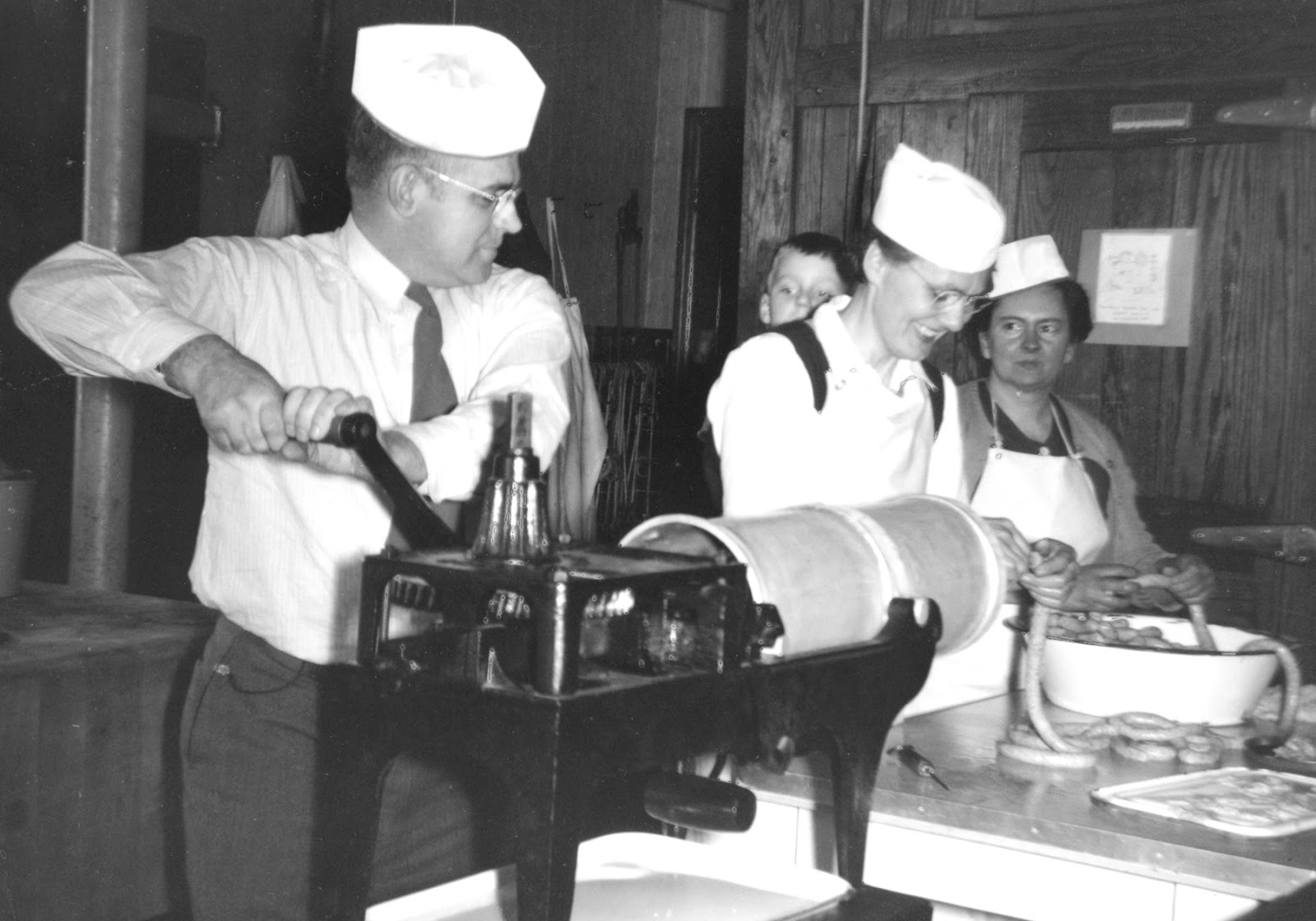
When the sausage that we call legislation is made it is subject to a quality control process. The ingredients get tested to make sure that everything is wholesome and has some nutritional value.
QC is performed by the courts. The tough part about legislative QC is that it takes real people with real cases butting against The System to get the testing done.
Someone has to get hurt to initiate legislative QC.
Lots of people have been getting hurt and performing QC in Oklahoma, and yet another declaration that the sausage isn't made of wholesome ingredients was declared by that state's Supreme Court yesterday.
There are a myriad of provisions in the 2013 Administrative Workers' Compensation Act that offend the sensibilities, but none worse, I think, than the revocation of permanent disability indemnity if the injured worker returns to work.
The Oklahoma Supreme Court sees it that way too.
AWCA Section 45(C)(5) also impermissibly "creates a subclass of employees subject to differential treatment" depending on whether the employees were able to return to work, the court said.
In addition the court said that disability from injuries to "scheduled members" cannot be determined through the use of the 6th Edition of the American Medical Association's “Guides to the Evaluation of Permanent Impairment.”
But the bigger part of the ruling is the court's disdain for disparate treatment among workers with regards to permanent partial disabilities.
The court said Section 45(C)(5) was unconstitutional. That statute provides that the amount of a worker's PPD award shall be reduced by 70% of the average weekly wage for each week he works in his pre-injury or equivalent job.
The court's rationale is that injured workers have a vested property interest in an award of PPD, and "these benefits replace something the employee lost for which the employer is liable." But with Section 45(C)(5), "the monetary award based on the physical disability rating to the employee's body becomes meaningless once the employee returns to work," as the statute allows for the award to be depleted if the claimant works long enough.
The court further said there was no valid reason to treat workers who are able to go back to work differently than workers who cannot.
Two justices dissented in part, on the grounds that if one provision of the AWCA is unconstitutional (indeed, it's turning out that much more fails QC testing) then the entire act is because everything is interwoven.
In other words, like a Federal Food and Drug Administration enforcement act, the entire batch of sausage needs to be recalled.
By the way, one commentator to the WorkCompCentral story on the case said that the "employers who are effectively held at gunpoint by the attorneys throughout the state at the mere 'claim' of a workplace injury" are the big losers because attorneys are paid contingent on the amount of disability.
Simple resolution - come up with a payment system for lawyers dedicated to protecting those hurt at work based on something other than a disability outcome. Failure to do otherwise simply reveals hypocritical bias (and dismisses the lawyers dedicated to a cause rather than a pay day).
To read the court's decision, click here.
To read the dissent, click here.
Showing posts with label disability. Show all posts
Showing posts with label disability. Show all posts
Wednesday, April 13, 2016


Tuesday, April 12, 2016
Anxiety Resolution
After so many years traveling the workers' compensation conference circuit, absorbing all of the education, statistics and analysis, it's nearly indisputable that perceived conditions of employment have more to do with a person's perception of injury than any actual injury itself - what the experts like to categorize as biopsychosocial factors.
These factors lead to seemingly incomprehensible case outcomes.
Like the recent Connecticut Supreme Court affirmation that an athletic FedEx driver was totally disabled for nearly 11 months despite running 4-minute miles working out during that same period.
William Hart exercised vigorously about 2 hours every day before reporting for work as a delivery driver for FedEx. He was a model employee from 1987 until June in 2009 when he received 2 written warnings: One causing a fuel spill when he failed to secure the cap on his truck's gas tank, and the other was for exceeding his allowable vacation time when he missed five days of work after his mother died.
Hart claimed he was very distressed by the reprimands and began to fear he would lose his job.
While he was at work on Sept. 15, 2009, Hart said he began to feel ill and light-headed after falling more than an hour behind schedule on his route. He said he was experiencing a fluttering sensation in his chest and a shortness of breath, along with a growing sense of panic, as he rushed through his stops.
After making a delivery to the fire station on Liberty Street in Pawcatuck, Hart asked a paramedic to check him out. The fire department summoned an ambulance after determining Hart's heart rate was over 200 beats per minute.
After he got to the hospital and doctors began tracking his pulse, Hart's heart rate went up to over 300 beats per minute (compare to normal which is between 60 and 100 BPM).
[DePaolo's Note: these are classic symptoms of a panic attack, usually associated with an anxiety disorder, which is not necessarily related to any physical or situational stimulus.]
The doctors at the hospital diagnosed Hart with a "paroxysmal atrial flutter," a malfunction in the right atrium, the heart’s natural pacemaker.
Doctors also determined that he had a low level of potassium in his body, which was indicative of dehydration. Hart remained in the hospital overnight, during which time his heart rate returned to normal.
Two weeks later, he was back at the gym and working out once more, although he said he was doing "less strenuous" exercises that he had previously done. His doctors continued to monitor his heart and kept him off work until Aug. 7, 2010.
Hart also began seeing a psychologist, who diagnosed him with post-traumatic stress disorder, depression, panic disorder with agoraphobia, and hypochondriasis.
Meanwhile, Hart returned to his normal workout routine, which including running on a treadmill at a 15.2% grade and a pace of 4.2 miles per hour, for 30 minutes.
FedEx's expert witness cardiologist testified that most people could not sustain that pace for three minutes.
Hart has not worked since September 2009 though, and he has been collecting Social Security disability benefits since May 2012.
The Workers Compensation Commission ruled Hart's claim compensable, and that was upheld by the Review Board.
FedEx then sought judicial review, and the Appellate Court transferred the case straight to the Supreme Court., in part arguing that Hart's physical condition was precipitated by lawful personnel actions, which the law says can not be compensable.
The Supreme Court upheld the Commission ruling because FedEx didn't present "any plausible explanation as to how the dehydration and resultant mineral deficiencies that precipitated the claimant’s heart problems and associated PTSD could have been the result of personnel decisions, real or imagined."
The court also said there was evidence that "other factors arising from the claimant’s employment, factors that were unrelated to any actual or potential personnel actions, also were substantial factors in causing his PTSD and associated anxiety, panic and depression" and that his "exemplary physical condition and impressive exercise regimen" didn't mean he couldn't still suffer a work-related heart injury.
My bet is that Hart would still be working today, and would have dismissed his anxiety attack (which, by the way, is not necessarily a psychological issue) as a personal issue had there not been the reprimands, particularly the time off for his mother's death.
Animosity towards the employer manifested via claim of work-induced physical symptoms is, despite all of the evidence, statistics and research, still not well appreciated.
Which is why workers' compensation is often referred to as the working person's dispute resolution system...
To read the court's decision, click here.

These factors lead to seemingly incomprehensible case outcomes.
Like the recent Connecticut Supreme Court affirmation that an athletic FedEx driver was totally disabled for nearly 11 months despite running 4-minute miles working out during that same period.
William Hart exercised vigorously about 2 hours every day before reporting for work as a delivery driver for FedEx. He was a model employee from 1987 until June in 2009 when he received 2 written warnings: One causing a fuel spill when he failed to secure the cap on his truck's gas tank, and the other was for exceeding his allowable vacation time when he missed five days of work after his mother died.
Hart claimed he was very distressed by the reprimands and began to fear he would lose his job.
While he was at work on Sept. 15, 2009, Hart said he began to feel ill and light-headed after falling more than an hour behind schedule on his route. He said he was experiencing a fluttering sensation in his chest and a shortness of breath, along with a growing sense of panic, as he rushed through his stops.
After making a delivery to the fire station on Liberty Street in Pawcatuck, Hart asked a paramedic to check him out. The fire department summoned an ambulance after determining Hart's heart rate was over 200 beats per minute.
After he got to the hospital and doctors began tracking his pulse, Hart's heart rate went up to over 300 beats per minute (compare to normal which is between 60 and 100 BPM).
[DePaolo's Note: these are classic symptoms of a panic attack, usually associated with an anxiety disorder, which is not necessarily related to any physical or situational stimulus.]
The doctors at the hospital diagnosed Hart with a "paroxysmal atrial flutter," a malfunction in the right atrium, the heart’s natural pacemaker.
Doctors also determined that he had a low level of potassium in his body, which was indicative of dehydration. Hart remained in the hospital overnight, during which time his heart rate returned to normal.
Two weeks later, he was back at the gym and working out once more, although he said he was doing "less strenuous" exercises that he had previously done. His doctors continued to monitor his heart and kept him off work until Aug. 7, 2010.
Hart also began seeing a psychologist, who diagnosed him with post-traumatic stress disorder, depression, panic disorder with agoraphobia, and hypochondriasis.
Meanwhile, Hart returned to his normal workout routine, which including running on a treadmill at a 15.2% grade and a pace of 4.2 miles per hour, for 30 minutes.
FedEx's expert witness cardiologist testified that most people could not sustain that pace for three minutes.
Hart has not worked since September 2009 though, and he has been collecting Social Security disability benefits since May 2012.
The Workers Compensation Commission ruled Hart's claim compensable, and that was upheld by the Review Board.
FedEx then sought judicial review, and the Appellate Court transferred the case straight to the Supreme Court., in part arguing that Hart's physical condition was precipitated by lawful personnel actions, which the law says can not be compensable.
The Supreme Court upheld the Commission ruling because FedEx didn't present "any plausible explanation as to how the dehydration and resultant mineral deficiencies that precipitated the claimant’s heart problems and associated PTSD could have been the result of personnel decisions, real or imagined."
The court also said there was evidence that "other factors arising from the claimant’s employment, factors that were unrelated to any actual or potential personnel actions, also were substantial factors in causing his PTSD and associated anxiety, panic and depression" and that his "exemplary physical condition and impressive exercise regimen" didn't mean he couldn't still suffer a work-related heart injury.
My bet is that Hart would still be working today, and would have dismissed his anxiety attack (which, by the way, is not necessarily a psychological issue) as a personal issue had there not been the reprimands, particularly the time off for his mother's death.
Animosity towards the employer manifested via claim of work-induced physical symptoms is, despite all of the evidence, statistics and research, still not well appreciated.
Which is why workers' compensation is often referred to as the working person's dispute resolution system...
To read the court's decision, click here.
Wednesday, April 6, 2016
PD Inequity
Yesterday I opined that the new minimum wage rates in California and New York would increase the disparity in income levels for permanently injured workers - i.e. the gulf between pre-injury earnings and post-injury indemnity would be even more pronounced than it is now leading to even more people on the edge of poverty.
A Rand Corp. report released Friday makes the point less dramatically because it does not deal with the new minimum wage law in California, but compares post-injury earnings over a period of time and as affected by the two major reforms since its first 2003 study: SB 899 and SB 863.
On average, a worker with a permanent disability will have a 28% reduction in earnings in the second year following an injury, concludes the report, "Benefits and Earnings Losses for Permanently Disabled Workers in California: Trends Through the Great Recession and Impacts of Recent Reforms."
Admittedly my math is rough and probably flawed, but if PD while the minimum wage is $10 an hour replaces only 72% of pre-injury earnings, then in 2022, when the full minimum wage of $15 an hour is the law, PD will replace only 36% of pre-injury earnings - and that's a chasm that is going to be political fire.
Rand researchers also point out that the reduction in earnings hits low wage earners more radically than those on the higher end of the scale. Changes implemented in 2012 by SB 863 to how permanent disability indemnity was calculated skews increases more acutely to impairments that had lower Future Earnings Capacity modifiers in the schedule prior to that reform because SB 863 normalized that modifier in the rating string to a standard 1.4.
Thus, the two lowest-ranked groups, impairments of the hand or finger and impairments of the knee, saw the largest increase in wage-replacement rates under SB 863.
Rand found that PD benefits under SB 899 replaced less than half of the wages lost by workers with hand or finger injuries, and about 30% of wages lost by workers with knee injuries. Post SB 863, those claims get the full 1.4 FEC modifier so benefits for hand or finger claims replace about 90% of lost wages, while benefits for knee conditions replace nearly 60% of lost wages.
But this is not an apples to apples comparison because other changes in the 2012 reform also affect PD.
Rand talks about "horizontal equity" - the notion that similarly situated workers should be treated similarly.
“Our analysis strongly rejects the hypothesis that the FEC factors as implemented under SB 899 led to horizontal equity across different types of impairments," Rand notes, "and we conclude that SB 863 does not systematically enhance or degrade the horizontal equity of the rating and benefit system.”
In other words, the FEC modifier didn't change things much, so standardizing it at 1.4 simplified calculating PD, which should have resulted in less litigation over the issue since prior to SB 863 it was found that the FEC modifier was a significant source of dispute.
That was a flawed assumption; litigation rates didn't change much...
But perhaps most alarming to me is that California's system of determining PD indemnity is probably one of the most horizontally equitable out of all the states - great pains were taken in the political and regulatory processes to make the system as fair across injuries and occupations as possible. Most states don't account for all those factors, if any at all.
Reading between the lines, what the research is really saying is that the base rate, the dollar number used for the weekly indemnity rate, will need to be increased, and this will become more acute and evident as the minimum wage increases.

A Rand Corp. report released Friday makes the point less dramatically because it does not deal with the new minimum wage law in California, but compares post-injury earnings over a period of time and as affected by the two major reforms since its first 2003 study: SB 899 and SB 863.
On average, a worker with a permanent disability will have a 28% reduction in earnings in the second year following an injury, concludes the report, "Benefits and Earnings Losses for Permanently Disabled Workers in California: Trends Through the Great Recession and Impacts of Recent Reforms."
Admittedly my math is rough and probably flawed, but if PD while the minimum wage is $10 an hour replaces only 72% of pre-injury earnings, then in 2022, when the full minimum wage of $15 an hour is the law, PD will replace only 36% of pre-injury earnings - and that's a chasm that is going to be political fire.
Rand researchers also point out that the reduction in earnings hits low wage earners more radically than those on the higher end of the scale. Changes implemented in 2012 by SB 863 to how permanent disability indemnity was calculated skews increases more acutely to impairments that had lower Future Earnings Capacity modifiers in the schedule prior to that reform because SB 863 normalized that modifier in the rating string to a standard 1.4.
Thus, the two lowest-ranked groups, impairments of the hand or finger and impairments of the knee, saw the largest increase in wage-replacement rates under SB 863.
Rand found that PD benefits under SB 899 replaced less than half of the wages lost by workers with hand or finger injuries, and about 30% of wages lost by workers with knee injuries. Post SB 863, those claims get the full 1.4 FEC modifier so benefits for hand or finger claims replace about 90% of lost wages, while benefits for knee conditions replace nearly 60% of lost wages.
But this is not an apples to apples comparison because other changes in the 2012 reform also affect PD.
Rand talks about "horizontal equity" - the notion that similarly situated workers should be treated similarly.
“Our analysis strongly rejects the hypothesis that the FEC factors as implemented under SB 899 led to horizontal equity across different types of impairments," Rand notes, "and we conclude that SB 863 does not systematically enhance or degrade the horizontal equity of the rating and benefit system.”
In other words, the FEC modifier didn't change things much, so standardizing it at 1.4 simplified calculating PD, which should have resulted in less litigation over the issue since prior to SB 863 it was found that the FEC modifier was a significant source of dispute.
That was a flawed assumption; litigation rates didn't change much...
But perhaps most alarming to me is that California's system of determining PD indemnity is probably one of the most horizontally equitable out of all the states - great pains were taken in the political and regulatory processes to make the system as fair across injuries and occupations as possible. Most states don't account for all those factors, if any at all.
Reading between the lines, what the research is really saying is that the base rate, the dollar number used for the weekly indemnity rate, will need to be increased, and this will become more acute and evident as the minimum wage increases.
If all else remains equal, then the maximum PD rate, now $280 per week for the most severe injuries, will need to be almost $500 per week just to remain in parity with 2016 wage replacement levels. And if Rand's research is taken at face value, that level is already inadequate to replace lost earnings.
Everything is lining up just nicely for the normal reform cycle of about 7 years...
Tuesday, April 5, 2016
Minimum Wage Widens the Gap

How all of this plays out, of course, is all speculation at this point. This is the single largest pay increase for the working poor, likely in history.
California's minimum wage increase is state wide immediately, tiered to business size. New York City will mandate $15 an hour for firms with 11 or more employees by 2019, and all others employers by 2020. Businesses in New York suburbs will be required to meet the minimum by 2022.
According to the Wall Street Journal, there were 53.6 million workers in the U.S. paid less than $15 an hour in 2015, including nine million in New York and California.
That nine million represents about 41% of workers in California and 38% of those in New York, excluding those who are self-employed, says the WSJ.
Economists are mixed in their reactions to this move.
Others say jobs will migrate out of the state, or that employers will get even stingier in their use of labor, or that automation and robotics development will escalate.
Some feel that it's about time to elevate the living standards of the lowest rung of the wage ladder, while others believe all that will actually occur is that the cost of living will simply rise to the next median, creating just another wage gap perpetuating the cycle.
Regardless of whether you believe in free market control over wages, or whether more governmental control is necessary, workers' compensation insurance companies will reap big premium increases, and claims indemnity payments will see rapid escalation as disability indexes upwards along with state average weekly wages.
But one indemnity element will become acutely painful: the economic disparity between those impacted long term by a work injury and those who are able to return to work quickly will become even more significant.
The WorkCompCentral report, Uncompensated Worker, demonstrates that those on long term disability wander closer and closer to the poverty line - many people who incur long term permanent disability lose not only their jobs, but any sense of financial security.
Research shows the path to poverty is exacerbated by a work injury that produces long term disability, and workers' compensation permanent disability indemnity benefits fail miserably to cover that gap.
Temporary disability indemnity rates will raise to meet the income elevation because in both California and New York it is indexed to the states' average weekly wages as determined by each state's formula.
But compensation for permanent disability isn't.
Which sets up the next big political fight, ergo "reform." Labor will push to close the gap between permanent disability indemnity and the "living wage," business will object to raising PD - and the question is going to be what each side will give up to get their requested part of the bargain.
New York Republicans had already tried to tie a "reform" of that state's work comp system to the minimum wage increase.
That obviously didn't work. They'll try again.
Thursday, January 28, 2016
The Tim Report
Every quarter or so, WorkCompCentral publishes a special report on the institution of workers' compensation.
I say "institution" because I believe that workers' compensation is not just an industry, or a program, or even a system, though it does encompass all of those elements.
Workers' compensation is an institution in the grandest sense - available to everyone and anyone that qualifies, with defined boundaries, rules, limitations...
Dictionary dot com defines "institution" as: "an organization, establishment, foundation, society, or the like, devoted to the promotion of a particular cause or program, especially one of a public, educational, or charitable character."
That pretty much defines workers' compensation no matter what your participation level is - worker, employer, vendor, government.

The institution of workers' compensation is constantly studied. There are lots of formal research organizations telling us what costs whom, where the dollars go, what the effect is.
Not too many look at the long term financial effect on the injured worker and his/her family when a lost time injury takes that person out of the productive work force.
WorkCompCentral released yesterday our independently commissioned study by Peter Rousmaniere on the topic: "The Uncompensated Worker: The Financial Impact of Workers’ Comp on Injured Workers & Their Families.”
This is the first report we know of that explores the risk of family instability while an injured worker recovers, and the conclusion is startling - an overall declination in the earnings of that worker to the detriment of the lifestyle of that workers' entire family, taking a large swath out of the recurrent economy.
I say "institution" because I believe that workers' compensation is not just an industry, or a program, or even a system, though it does encompass all of those elements.
Workers' compensation is an institution in the grandest sense - available to everyone and anyone that qualifies, with defined boundaries, rules, limitations...
Dictionary dot com defines "institution" as: "an organization, establishment, foundation, society, or the like, devoted to the promotion of a particular cause or program, especially one of a public, educational, or charitable character."
That pretty much defines workers' compensation no matter what your participation level is - worker, employer, vendor, government.

The institution of workers' compensation is constantly studied. There are lots of formal research organizations telling us what costs whom, where the dollars go, what the effect is.
Not too many look at the long term financial effect on the injured worker and his/her family when a lost time injury takes that person out of the productive work force.
WorkCompCentral released yesterday our independently commissioned study by Peter Rousmaniere on the topic: "The Uncompensated Worker: The Financial Impact of Workers’ Comp on Injured Workers & Their Families.”
This is the first report we know of that explores the risk of family instability while an injured worker recovers, and the conclusion is startling - an overall declination in the earnings of that worker to the detriment of the lifestyle of that workers' entire family, taking a large swath out of the recurrent economy.
This report examines a fictitious worker, Tim, that we would find any day anywhere in the USA - an electrician - who incurs a lost time work injury with attendant disability and indemnity.
"In 31 states, workers receive a reduction in take-home pay of 15% or more when they're injured on the job," the report concludes, "and in half the states, households with two median wage earners, one on work disability and the other working full time, cannot afford to sustain their basic budget."
Bottom line finding: regardless of indemnity, the financial impact on a regular middle class American of modest means (certainly not poverty level) is financially ruined for the rest of their lives regardless of domicile…
I, and my company, WorkCompCentral, may be criticized by the "payer" community for being too liberal, for pandering to injured workers.
So be it. This report does not take a position, but simply points out a fact: in general, getting hurt while working can mean an irreversible lowering in the standard of living for most of the population, and this has serious consequences for that worker, his/her family, the employer, the local community and the larger economy.
The general media has taken the workers' compensation institution to task for failing to live up to promises made over 100 years ago. In my opinion, this industry can not stand by the wayside and defend an indefensible position: that the safety net of work injury protection is not meeting its obligation.
What we need to do as an industry in support of the institution is to recognize these shortcomings, learn from them, and assist our lawmakers in making wise decisions to ensure that Tim, and others like him, get the support necessary to make them a sustainable position in the economy.
Here's the deal - every Tim that is off work needs to be replaced, and every Tim that doesn't have the financial wherewithal to meet needs after a work injury plays a part in economic stagnation.
Our mission through workers' compensation is to stabilize the economy, and get people contributing to it, not taking from it.
This report should stimulate us to come up with solutions to this vexing issue.
The report is free, but you must either logon with your WorkCompCentral account to download it or register a new account.
The report is free, but you must either logon with your WorkCompCentral account to download it or register a new account.
Thursday, January 21, 2016
Performance Perspective
"Will you decide to heal yourself and come back stronger? Or will you allow the injury to get the best of you? A great tool is to choose the best perspective and focus on what you want to happen," says Matt Belair, a sport psychologist in an interview in International Mountain Bike magazine. "I want to recover quickly and perform my best, I will continue to have total confidence in my abilities."

Athletes get hurt all the time. Particularly in the more "action" oriented sports more popular with the current generation, such as motocross, mountain bikes, parkour, etc.
Self belief is HUGE. The IMB article cited above is about accomplishing athletic feats at the very upper echelon of performance. There are lots of talented riders who are near equal in physical fitness and ability, for example, but only a very few have the mental horsepower to visualize and accomplish a world championship. or a double back flip with a twist over a 50 foot chasm...
That same mental horsepower is healing too.
Long time workers' compensation leader and expert, Robert Aurbach (now residing in Australia) has researched and written extensively on neuroplasticity - the ability of the brain to create new synaptic pathways in response to external stimuli, i.e. learned behavior.
This phenomenon works both ways - our brains can either learn to heal and overcome injury, or learn to be disabled.
Part of the external stimulus that affects neuroplastic response is system input - in our case how the laws, regulations and application of them to an injured worker's plight either stimulate, or depress, the healing forces.
It's sort of true that one can choose to be disabled, or not; but external stimulus plays a big part in that choice. And the starting point is the individual's own mental strength. If we are starting off with a person who's self picture is weak, then it is much more difficult to rewire his or her brain to overcome adversity than for someone who's mental picture of themselves is stronger to start with.
Founder of the all volunteer Work Injured Resources Connection (WIRC) in Adelaide, Australia, Rosemary McKenzie-Ferguson, sees the challenges on a daily basis. She deals with the people (not their cases) who are ejected from the workers' compensation system without the resources to find their new path in life.
She tells several stories in a recent publication of the Safety Institute of Australia about recovering injured workers, and she makes a very important distinction for those folks who are having a tough time finding normalcy in their lives: they need help understanding that they have an injury, and that they are not the injury.
This might be subtle, but it is an important distinction. One HAS an injury. When one BECOMES the injury, then they will not be able to overcome the injurious sequelae.
She writes about an injured factory worker who was earning $28,000 per annum and had to work endless hours of overtime to get up to $35,000 to support his family. His workplace injury meant he would never return to the factory floor.
WIRC first job was to get him to reimagine his life, reimagine his abilities, understand that HE was not the injury and that he had the power to change.
They got him started with a 12-week basic computer course and, according to Rosemary, "the last time I spoke with this injured worker he was based in Sydney, working between Sydney and New York, and earning many times the $28,000."
She writes about an enterprising engineering firm that turned a disused corner of the business into an area where their injured workers repaired wheelchairs and bikes for the community groups in a 50km radius of where they were based. This gave the injured workers something real to do, and it supported the injured workers as they regained medical capacity hours, but it also encouraged the rest of the workforce to get involved which improved the culture of the business.
Another injured worker came to WIRC with industrial emphysema from working in the coal industry. The message he got from the system was “just go away” (that is the polite version). He lost his ability to believe in himself. According to Rosemary, this man is now a mentor for others entering the construction industry, using decades of hands-on workplace knowhow.
There is a big push in the workers' compensation industry to reinvent itself. After 100 years we have learned quite a bit about ourselves, our mission, and how we impact people and lives.
For instance, at third party administrator, Gallagher Bassett, claims adjusters are "resolution managers," a title that denotes the important role the claims person has in resolving the ultimate conflict - that of self-belief.
This is a great start. We are in the people business. People have worth and that worth begins with the self. We can provide medical care, and a few dollars to help pay the bills, but the ultimate success is when belief in the self is restored - then the pathways to one's return to health, return to society, return to work, are opened.
It's a whole new paradigm, I believe. It's not one that is going to be filled by special interest vendors, though certainly there will be many entrepreneurial efforts towards this paradigm.
It's an entire cultural shift. I can see it happening all around us. It's part of the reason why we started Comp Laude - to recognize those that have been successful in helping, and actually achieving, the best perspective for resolving the work injury.
Restoring the confidence in one's abilities - that's a tough job, and a real goal. From there comes all other success.
Some folks will never be able to reach that goal for one reason or another, be it childhood psychology, drugs, whatever.
But most people have that power.
And I think a revolution in claims resolution is slowly taking place in our industry as we recognize that it's not all about bill review, guidelines, indemnity limits or any of the other artificial system contrivances in place.
There's always a passel of bad news about work comp. But I also know that there's big pride in most of us for doing a job well in restoring an injured worker's self-belief.
"Focus on what you want to happen." We don't have to provide psychological services to every injured worker - just help them focus on recovering quickly, performing their best, and having confidence in their abilities. It won't work for everyone, but it will work for most.

Athletes get hurt all the time. Particularly in the more "action" oriented sports more popular with the current generation, such as motocross, mountain bikes, parkour, etc.
Self belief is HUGE. The IMB article cited above is about accomplishing athletic feats at the very upper echelon of performance. There are lots of talented riders who are near equal in physical fitness and ability, for example, but only a very few have the mental horsepower to visualize and accomplish a world championship. or a double back flip with a twist over a 50 foot chasm...
That same mental horsepower is healing too.
Long time workers' compensation leader and expert, Robert Aurbach (now residing in Australia) has researched and written extensively on neuroplasticity - the ability of the brain to create new synaptic pathways in response to external stimuli, i.e. learned behavior.
This phenomenon works both ways - our brains can either learn to heal and overcome injury, or learn to be disabled.
Part of the external stimulus that affects neuroplastic response is system input - in our case how the laws, regulations and application of them to an injured worker's plight either stimulate, or depress, the healing forces.
It's sort of true that one can choose to be disabled, or not; but external stimulus plays a big part in that choice. And the starting point is the individual's own mental strength. If we are starting off with a person who's self picture is weak, then it is much more difficult to rewire his or her brain to overcome adversity than for someone who's mental picture of themselves is stronger to start with.
Founder of the all volunteer Work Injured Resources Connection (WIRC) in Adelaide, Australia, Rosemary McKenzie-Ferguson, sees the challenges on a daily basis. She deals with the people (not their cases) who are ejected from the workers' compensation system without the resources to find their new path in life.
She tells several stories in a recent publication of the Safety Institute of Australia about recovering injured workers, and she makes a very important distinction for those folks who are having a tough time finding normalcy in their lives: they need help understanding that they have an injury, and that they are not the injury.
This might be subtle, but it is an important distinction. One HAS an injury. When one BECOMES the injury, then they will not be able to overcome the injurious sequelae.
She writes about an injured factory worker who was earning $28,000 per annum and had to work endless hours of overtime to get up to $35,000 to support his family. His workplace injury meant he would never return to the factory floor.
WIRC first job was to get him to reimagine his life, reimagine his abilities, understand that HE was not the injury and that he had the power to change.
They got him started with a 12-week basic computer course and, according to Rosemary, "the last time I spoke with this injured worker he was based in Sydney, working between Sydney and New York, and earning many times the $28,000."
She writes about an enterprising engineering firm that turned a disused corner of the business into an area where their injured workers repaired wheelchairs and bikes for the community groups in a 50km radius of where they were based. This gave the injured workers something real to do, and it supported the injured workers as they regained medical capacity hours, but it also encouraged the rest of the workforce to get involved which improved the culture of the business.
Another injured worker came to WIRC with industrial emphysema from working in the coal industry. The message he got from the system was “just go away” (that is the polite version). He lost his ability to believe in himself. According to Rosemary, this man is now a mentor for others entering the construction industry, using decades of hands-on workplace knowhow.
There is a big push in the workers' compensation industry to reinvent itself. After 100 years we have learned quite a bit about ourselves, our mission, and how we impact people and lives.
For instance, at third party administrator, Gallagher Bassett, claims adjusters are "resolution managers," a title that denotes the important role the claims person has in resolving the ultimate conflict - that of self-belief.
This is a great start. We are in the people business. People have worth and that worth begins with the self. We can provide medical care, and a few dollars to help pay the bills, but the ultimate success is when belief in the self is restored - then the pathways to one's return to health, return to society, return to work, are opened.
It's a whole new paradigm, I believe. It's not one that is going to be filled by special interest vendors, though certainly there will be many entrepreneurial efforts towards this paradigm.
It's an entire cultural shift. I can see it happening all around us. It's part of the reason why we started Comp Laude - to recognize those that have been successful in helping, and actually achieving, the best perspective for resolving the work injury.
Restoring the confidence in one's abilities - that's a tough job, and a real goal. From there comes all other success.
Some folks will never be able to reach that goal for one reason or another, be it childhood psychology, drugs, whatever.
But most people have that power.
And I think a revolution in claims resolution is slowly taking place in our industry as we recognize that it's not all about bill review, guidelines, indemnity limits or any of the other artificial system contrivances in place.
There's always a passel of bad news about work comp. But I also know that there's big pride in most of us for doing a job well in restoring an injured worker's self-belief.
"Focus on what you want to happen." We don't have to provide psychological services to every injured worker - just help them focus on recovering quickly, performing their best, and having confidence in their abilities. It won't work for everyone, but it will work for most.
Wednesday, January 13, 2016
The TTD Gap

But the problem is that artificial TTD limits ensnare folks who face a change in medical condition and legitimately are TTD, but the law doesn't recognize that exception creating a huge financial hardship on the injured worker and his/her family.
Oklahoma has been a hot bed of appellate litigation since "reform" a couple of years ago, and the issue of a "gap" being created as a consequence of TTD limits has been thrown to the state Supreme Court.
Darla Jean Camp had worked for Atwood Distributing, the operator of a farm and ranch supply store in Enid, Oklahoma. She suffered an admitted, compensable soft tissue injury to her back and hip in March 2014.
Section 62 of the Oklahoma act generally limits TTD compensation for soft tissue injuries to eight weeks, but it provides for an additional eight weeks of benefits if the worker receives injections as treatment. It also permits an administrative law judge to award up to 16 more weeks of benefits if a worker winds up needing surgery.
Since Camp received injections, Atwood's insurance company, Zurich, authorized 16 extra weeks of TTD.
Camp's doctor later determined that she would need hip surgery. The Administrative Law authorized the procedure and awarded an additional 16 weeks of TTD payments.
Camp had hip surgery last July. She then filed a request for more TTD, to compensate her for the entire period of disability between the date of her March 2014 accident and the July 2015 surgery.
Zurich objected, contending she had already received the maximum 32 weeks of benefits under Section 62.
The ALJ found Atwood was entitled to an additional 36 weeks of TTD. He opined that Section 62's cap applied only to "nonsurgical" injuries, and since Atwood had surgery, Section 45, which caps a worker's entitlement to 104 weeks of TTD, controlled.
Zurich appealed, citing a 2012 case from the Court of Civil Appeals called Scott v. Sprint PCS for the principle that statutory TTD caps for nonsurgical injuries will still limit a worker's entitlement to TTD even if the worker undergoes surgery, for the period up until the surgery.
The Scott case pre-dates the Administrative Workers' Compensation Act, but the 2009 law it was applying contained a restriction on TTD for soft-tissue injuries that is virtually identical to what exists now in Section 62.
However, the commission found the Scott case was not controlling on Camp's case. The commission said the court in Scott had been concerned with the legislative intent to encourage workers to not delay a surgery if surgery is necessary, and there was no indication of delay on the part of Camp.
The commission focused its analysis on the plain language of Section 62 instead. It concluded that Section 62 permitted the TTD restriction to be lifted once surgery is performed, because Section 62 specifically applies only to "non-surgical soft tissue injuries."
Obviously, the commission said, "once surgery has been performed, the soft tissue injury is no longer 'non-surgical.'"
The commission concluded that "a compensable 'surgical' soft tissue injury" is still subject to the limits of Section 45, but as long as the worker is unable to work after an injury, the worker is entitled to TTD benefits for up to 104 weeks, which would mean Camp would get an additional 68 weeks of benefits for TTD status both before and after surgery.
In its petition for review to the Supreme Court, Zurich maintains that a worker's surgery cannot somehow retroactively "transform an injury" and remove it from limitations for soft tissue injuries contained in Section 62.
To read the commission decision, click here.
Zurich's petition for review is here.
Camp's response is here.
Camp's motion for the court to retain jurisdiction is here.
Tuesday, January 12, 2016
PPD Philosophy
A recent Illinois case is exemplary of the kind of legal interpretation that drives employers and their insurance companies nuts, because there seems to be an illogical detachment from reality, even though legally justifiable.
At issue in Jackson Park Hospital v. IWCC (Jenkins) was how to determine a Permanent Partial Disability award - the single most litigious facet of workers' compensation law.

Kathy Jenkins had worked as a stationary engineer for Jackson Park Hospital, in Chicago. It was her job to address plumbing, heating, and electrical maintenance issues throughout the hospital facility.
Jenkins hurt her back in October 2005 while trying to climb into a locked office through a sliding glass window.
Her treating doctor authorized her to return to sedentary work in February 2007. The hospital offered Jenkins a clerical position in its accounting department. The hospital later moved Jenkins to another clerical position in its employee health department, and then to its security department.
Even though the hospital continued to pay Jenkins at the same rate she had earned as a stationary engineer in each of these positions, Jenkins still filed a request for PPD benefits based on Section 8(d)(1).
Section 8(d)(1) of the Illinois workers' compensation statute provides that a worker is entitled to a wage differential award when she is partially incapacitated from pursuing her usual employment, and there is a difference between the average amount that she would be able to earn in her time-of-injury job and in the average amount which she would be able to earn after her accident.
Alternatively, Section 8(d)(2) provides for a PPD award based on a percentage-of-the-person-as-a-whole when the worker is disabled from continuing to her time-of-injury job, but she does not suffer an impairment of earning capacity.
The arbitrator in the Jenkins case determined that Section 8(d)(1) was inapplicable because Jenkins had suffered no actual reduction in her income. He instead awarded her PPD benefits based on a percentage of the person as a whole under Section 8(d)(2).
Jenkins appealed to the Illinois Workers' Compensation Commission. The hospital terminated her while her appeal was pending. She filed an emergency motion to remand the case to the arbitrator in order to reopen proofs to allow additional evidence of her termination.
The commission denied her motion, and later affirmed the arbitrator and adopted the arbitration decision as its own ruling.
Jenkins sought judicial review. The Circuit Court Judge reversed the commission, stating the commission's decision to award benefits under Section 8(d)(2) instead of 8(d)(1) went against the manifest weight of the evidence. He ordered the case remanded for the commission to issue Jenkins a wage-differential award.
On remand, the commission awarded Jenkins $389.60 per week, from Feb. 19, 2007, through the duration of her disability.
The hospital appealed, which was upheld by the Circuit Court, so the hospital petitioned the Appellate Court for relief.
On Friday, the Appellate Court said the "crucial issue" in determining whether an award is appropriate under Section 8(d)(1) or 8(d)(2) is whether the claimant has suffered an impairment of her earning capacity.
"Earning capacity" is not simply the amount that a worker is making.
Since a worker may not have any actual loss of income if she is receiving "an inflated wage in an employer-controlled job that does not otherwise exist in the labor market," the court said that an impairment of earning capacity cannot be determined by simply comparing a worker's pre- and post-injury earnings.
The relevant inquiry needs to be what Jenkins' actual earning capacity would be, in light of her physical limitations from a decade-old back injury and her 8th-grade education, the court said.
If another employer would not hire her for the $23.61 per hour that Jackson Park Hospital was paying her as a security guard, the court said Jenkins' post-injury wages could not be considered an accurate reflection of her earning capacity.
Judicial interpretations can be frustrating for employers in situations such as the Jenkins case, where they thought they were doing the right thing by maintaining an employee in a wage class higher than the replacement job duties dictate.
Business likes stability and predictability - cases like Jenkins are frustrating because there is neither.
And the judicial football that this case highlights challenges some of the basic tenets of the 1917 US Supreme Court's constitutional blessing on compulsory workers' compensation in NY Central Railroad vs. White: no protracted disputes about damages, limited and fixed obligation of the employer, and a speedy remedy.
The employee suffers too - I wonder if Jenkins would still have a job if this dispute about earning capacity had not dominated her case.
At issue in Jackson Park Hospital v. IWCC (Jenkins) was how to determine a Permanent Partial Disability award - the single most litigious facet of workers' compensation law.

Kathy Jenkins had worked as a stationary engineer for Jackson Park Hospital, in Chicago. It was her job to address plumbing, heating, and electrical maintenance issues throughout the hospital facility.
Jenkins hurt her back in October 2005 while trying to climb into a locked office through a sliding glass window.
Her treating doctor authorized her to return to sedentary work in February 2007. The hospital offered Jenkins a clerical position in its accounting department. The hospital later moved Jenkins to another clerical position in its employee health department, and then to its security department.
Even though the hospital continued to pay Jenkins at the same rate she had earned as a stationary engineer in each of these positions, Jenkins still filed a request for PPD benefits based on Section 8(d)(1).
Section 8(d)(1) of the Illinois workers' compensation statute provides that a worker is entitled to a wage differential award when she is partially incapacitated from pursuing her usual employment, and there is a difference between the average amount that she would be able to earn in her time-of-injury job and in the average amount which she would be able to earn after her accident.
Alternatively, Section 8(d)(2) provides for a PPD award based on a percentage-of-the-person-as-a-whole when the worker is disabled from continuing to her time-of-injury job, but she does not suffer an impairment of earning capacity.
The arbitrator in the Jenkins case determined that Section 8(d)(1) was inapplicable because Jenkins had suffered no actual reduction in her income. He instead awarded her PPD benefits based on a percentage of the person as a whole under Section 8(d)(2).
Jenkins appealed to the Illinois Workers' Compensation Commission. The hospital terminated her while her appeal was pending. She filed an emergency motion to remand the case to the arbitrator in order to reopen proofs to allow additional evidence of her termination.
The commission denied her motion, and later affirmed the arbitrator and adopted the arbitration decision as its own ruling.
Jenkins sought judicial review. The Circuit Court Judge reversed the commission, stating the commission's decision to award benefits under Section 8(d)(2) instead of 8(d)(1) went against the manifest weight of the evidence. He ordered the case remanded for the commission to issue Jenkins a wage-differential award.
On remand, the commission awarded Jenkins $389.60 per week, from Feb. 19, 2007, through the duration of her disability.
The hospital appealed, which was upheld by the Circuit Court, so the hospital petitioned the Appellate Court for relief.
On Friday, the Appellate Court said the "crucial issue" in determining whether an award is appropriate under Section 8(d)(1) or 8(d)(2) is whether the claimant has suffered an impairment of her earning capacity.
"Earning capacity" is not simply the amount that a worker is making.
Since a worker may not have any actual loss of income if she is receiving "an inflated wage in an employer-controlled job that does not otherwise exist in the labor market," the court said that an impairment of earning capacity cannot be determined by simply comparing a worker's pre- and post-injury earnings.
The relevant inquiry needs to be what Jenkins' actual earning capacity would be, in light of her physical limitations from a decade-old back injury and her 8th-grade education, the court said.
If another employer would not hire her for the $23.61 per hour that Jackson Park Hospital was paying her as a security guard, the court said Jenkins' post-injury wages could not be considered an accurate reflection of her earning capacity.
Judicial interpretations can be frustrating for employers in situations such as the Jenkins case, where they thought they were doing the right thing by maintaining an employee in a wage class higher than the replacement job duties dictate.
Business likes stability and predictability - cases like Jenkins are frustrating because there is neither.
And the judicial football that this case highlights challenges some of the basic tenets of the 1917 US Supreme Court's constitutional blessing on compulsory workers' compensation in NY Central Railroad vs. White: no protracted disputes about damages, limited and fixed obligation of the employer, and a speedy remedy.
The employee suffers too - I wonder if Jenkins would still have a job if this dispute about earning capacity had not dominated her case.
Wednesday, December 9, 2015
Permanently Temporary
The reason many states have implemented an artificial date for termination of temporary total disability status is because, as the Missouri Supreme Court just recently opined, the date a worker attains maximum medical improvement is not a "bright-line date to terminate temporary total disability benefits."
 **********
Carl Greer, a long-time employee of Sysco Foods, accidentally stuck his foot out from his stationary forklift into the running line for equipment in the Sysco warehouse in February 2006. A coworker on another forklift collided with Greer's forklift, and his foot was crushed between the forklifts.
Greer underwent medical treatment for several months and was released to return to modified work in August 2006. His doctor placed him at MMI in April 2007.
But Greer continued to complain of pain in his foot. He went to see Dr. Bret Grebing in July 2007. Dr. Grebing diagnosed him with tarsal tunnel syndrome – a nerve condition in the foot, similar to carpal tunnel syndrome in the wrist.
Greer underwent surgery on his foot in June 2010. In the meantime, Greer filed a workers' compensation claim asserting he was permanently and totally disabled by the combination of his foot injury and his pre-existing disabilities from earlier back and shoulder injuries.
The Administrative Law Judge found Greer was not permanently and totally disabled, and that Greer had a permanent partial disability of 27.5% from the forklift accident.
The ALJ also determined that Greer had reached MMI for the foot injury by April 2007, and so Greer was not entitled to any TTD benefits after that date.
[The judge further determined that Greer's benefits had to be reduced by 25% because Greer had violated a workplace safety rule by allowing his foot to be in the running line for equipment in the first place.]
Greer appealed, and the commission (which also overturned the safety penalty) ruled that he was entitled to an additional period of TTD benefits after the 2010 surgery.
The Court of Appeals reversed the award of TTD last November, but the Supreme Court on Tuesday said the commission's decision was supported by substantial and competent evidence.
The Supreme Court explained that Section 287.149.1 of the Missouri Workers' Compensation Act requires that temporary total or partial disability benefits be paid "throughout the rehabilitative process.”
Thus, when the commission is presented with evidence that a claimant has reached MMI, yet seeks additional treatment beyond that date for the work-related injury in an attempt to restore himself to a condition of health or normal activity by a process of medical rehabilitation, the court said "the commission must make a factual determination as to whether the additional treatment was part of the rehabilitative process."
If the commission determines the additional treatment was part of the claimant’s rehabilitative process, then he is entitled to TTD benefits pursuant to Section 287.149.1 until the rehabilitative process is complete, the court ruled.
**********
 **********
Carl Greer, a long-time employee of Sysco Foods, accidentally stuck his foot out from his stationary forklift into the running line for equipment in the Sysco warehouse in February 2006. A coworker on another forklift collided with Greer's forklift, and his foot was crushed between the forklifts.
Greer underwent medical treatment for several months and was released to return to modified work in August 2006. His doctor placed him at MMI in April 2007.
But Greer continued to complain of pain in his foot. He went to see Dr. Bret Grebing in July 2007. Dr. Grebing diagnosed him with tarsal tunnel syndrome – a nerve condition in the foot, similar to carpal tunnel syndrome in the wrist.
Greer underwent surgery on his foot in June 2010. In the meantime, Greer filed a workers' compensation claim asserting he was permanently and totally disabled by the combination of his foot injury and his pre-existing disabilities from earlier back and shoulder injuries.
The Administrative Law Judge found Greer was not permanently and totally disabled, and that Greer had a permanent partial disability of 27.5% from the forklift accident.
The ALJ also determined that Greer had reached MMI for the foot injury by April 2007, and so Greer was not entitled to any TTD benefits after that date.
[The judge further determined that Greer's benefits had to be reduced by 25% because Greer had violated a workplace safety rule by allowing his foot to be in the running line for equipment in the first place.]
Greer appealed, and the commission (which also overturned the safety penalty) ruled that he was entitled to an additional period of TTD benefits after the 2010 surgery.
The Court of Appeals reversed the award of TTD last November, but the Supreme Court on Tuesday said the commission's decision was supported by substantial and competent evidence.
The Supreme Court explained that Section 287.149.1 of the Missouri Workers' Compensation Act requires that temporary total or partial disability benefits be paid "throughout the rehabilitative process.”
Thus, when the commission is presented with evidence that a claimant has reached MMI, yet seeks additional treatment beyond that date for the work-related injury in an attempt to restore himself to a condition of health or normal activity by a process of medical rehabilitation, the court said "the commission must make a factual determination as to whether the additional treatment was part of the rehabilitative process."
If the commission determines the additional treatment was part of the claimant’s rehabilitative process, then he is entitled to TTD benefits pursuant to Section 287.149.1 until the rehabilitative process is complete, the court ruled.
**********
Part of the Grand Bargain is that employers (and their insurance companies) have "certainty" in the process (albeit, certainty is bilateral for the injured worker as well).
A "temporary" disability status looks a lot less temporary when it endures for more than four years. And an employer/carrier has no certainty as to when something isn't temporary if there is not a "bright-line date to terminate temporary total disability benefits," as the Court said.
Now you know why many states artificially limit TTD.
The case is Greer v. Sysco Food Services, No. SC94724.
A "temporary" disability status looks a lot less temporary when it endures for more than four years. And an employer/carrier has no certainty as to when something isn't temporary if there is not a "bright-line date to terminate temporary total disability benefits," as the Court said.
Now you know why many states artificially limit TTD.
The case is Greer v. Sysco Food Services, No. SC94724.
Wednesday, December 2, 2015
Defining Temporary

By the very simple universally accepted definition, temporary means lasting only a period of time - what that time is, however, is not universally accepted.
Washington DC, Virginia, Indiana and South Carolina have 500-week caps on "temporary" benefits.
That seems generous compared to California,Texas and Florida, which have the shortest periods of TTD, cutting off benefits at the 104 week-mark (California makes an exception for certain types of injuries where the cap is doubled).
The limit in Florida is before that state's supreme court after the First District Court of Appeals ruled the limitation constitutional, and that St. Petersburg firefighter Bradley Westphal could seek permanent total disability benefits when his TTD ran out.
The California Workers' Compensation Appeals Board issued an en banc decision saying that an employer or insurer must start paying permanent disability benefits based on a reasonable estimate of an injured worker's ultimate level of permanent disability if the applicant has exhausted his 104 weeks of eligibility for temporary disability benefits.
In contrast, the Wyoming Supreme Court last June invalidated an administrative rule that limited temporary total disability benefits to 36 months.
Last week the District of Columbia Court of Appeals ruled in Clement et al v. District of Columbia Department of Employment Services that the 500 week limit for "any one injury causing temporary or permanent partial disability" applied to injured workers who are temporarily totally disabled.
Royston Clement and Marie Eason had argued that the plain language of D.C. Code Section 32-1505 (b) indicated that the 500-week limit applied only to temporary partial disability benefits and permanent partial disability benefits.
The Compensation Review Board said the statute was ambiguous, but concluded that lawmakers had intended to set a maximum length of time during which an injured worker could recover benefits for both total temporary and permanent partial disabilities, thus the 500-week cap applied to Clement and Eason.
The appellate court agreed.
500 weeks - that's 9.6 years of being "temporarily" disabled.
One of the major tenets of workers' compensation law is that there be "certainty."
The employer needs to have certainty as to its (or it's insurance company's) liability.
The injured worker needs to have certainty about an income stream.
Neither can be certain if there's never a resolution for a temporary situation. At some point a line has to be drawn, a boundary set, a definition in place that reasonable people can rely upon so the next chapter in a workers' compensation case can be written.
Setting a time limit on a temporary benefit may seem arbitrary, and certainly there are going to be people on the back end of the curve that don't fall neatly within the proscribed period - the unfortunate thing about workers' compensation, or for that matter any sort of benefit system, is that it can not be all things to all people all the time.
I keep going back to the original "definition" of the Grand Bargain established by the United States Supreme Court back in 1917 - "reasonably just substitute."
In a civil case, there is no accommodation for temporary total disability. There is simply a verdict and it might include components for lost wages, pain and suffering, and other sorts of "common law" components that we, as a society, have deemed appropriate when there is a "loss."
The US Supreme Court, in NY Railroad vs. White, said certainty was a key element of determining whether workers' compensation is a "reasonably just substitute" and that certainty applies to both employer and injured worker.
That workers' compensation sets for a different standard for "damages" with categories of disability: temporary partial, temporary total, permanent partial and permanent total. These substitute for wage loss, and to some degree pain and suffering in as much as disabilities that have permanency are typically paid in accordance with some sort of schedule.
At some point in the duration of a disability it must cease to be temporary. Perhaps a medical condition has not yet stabilized after nine and a half years - well life is never stable. There is never permanency to life - it is dynamic, ever changing.
The only permanency is death.
And there's a payment schedule for that too...
Tuesday, November 3, 2015
Avoid Disability

There are laws against disability discrimination.
The Americans with Disabilities Act came into existence back in 1990 among great fan fare. The business world said the ADA was going to make America uncompetitive and destroy the economy. Disability advocates said the law was necessary to even the playing field.
Many state work comp laws penalize discrimination against the work injured/disabled.
Without an overt, obvious and egregious act of discrimination, though, proving discrimination and enforcing the rules is very difficult.
A recently published study unfortunately confirms that disability discrimination is still very wide spread, and demonstrates much of what I've ranted about in the past: workers' compensation has nothing to do with return to work, and while much of the return to work equation rests with the injured employee's desires, active discrimination on the part of employers plays a big roll too.
The study was a a field experiment that sent job applications in response to 6,016 advertised accounting positions from well-qualified fictional applicants, with one-third of cover letters disclosing that the applicant has a spinal cord injury, one-third disclosing the presence of Asperger’s Syndrome, and one-third not mentioning disability.
These specific disabilities were chosen because they would not be expected to limit productivity in accounting, helping rule out productivity-based explanations for any differences in employer responses.
Half of the resumes portrayed a novice accountant, and half portrayed an experienced one.
The fictional applicants with disabilities received 26% fewer expressions of employer interest than those without disabilities, with little difference between the two types of disability.
Novice accountant applicants with no disability referenced received a quarter more "acceptance" than experienced applicants with a disability reference.
Here's a stark reality - while workers' compensation has nothing to do with return to work, it spits out people with "disabilities" even if they don't have any of consequence to job performance.
And people with disabilities can't get jobs.
Perhaps I've taken the wrong view. Workers' compensation has everything to do with return to work, but not in the sense that vocational vendors have been pushing.
Rather, workers' compensation's role in return to work is negative - people exiting the workers' compensation system with some disability will find closed doors, even at their pre-injury place of employment.
For injured workers, again, the lesson is clear: get out of the work comp system as quickly as possible, and work hard to avoid "disability."
The paper is by Rutgers and Syracuse University researchers: Ameri, Mason and Schur, Lisa and Adya, Meera and Bentley, Scott and McKay, Patrick and Kruse, Douglas L., "The Disability Employment Puzzle: A Field Experiment on Employer Hiring Behavior" (September 2015). NBER Working Paper No. w21560. Available at SSRN: http://ssrn.com/abstract=2663198. Thanks to Dr. Jennifer Christian for bringing this study to my attention.
Thursday, October 29, 2015
You Don't Belong Here

He's a resident at Mom's memory care facility. I've known him since Mom started there.
Richard is in his mid-to-late 60s. He's over six feet tall, but hunches over on his walker so he looks more like five foot ten. He always wears an FBI hat, has at least 2 hand held radios (and gets very upset if one is missing) and, as one would expect from an FBI agent, always has a serious demeanor.
Vascular dementia is Richard's disease. According to the Alzhiemer's Association website, "Vascular dementia is a decline in thinking skills caused by conditions that block or reduce blood flow to the brain, depriving brain cells of vital oxygen and nutrients."
His wife told me that Richard was fine, a normal operating brain, when he went to bed one night. He woke up the next day severely incapacitated.
Vascular dementia can work like that, sort of like a stroke. One day you're all good, the next morning you have significant cognitive impairment, though more often than not changes are progressive, and yes, age is a factor.
Richard's dementia has attacked, in particular, his speech. He can still speak, but it is in whispered tones and he mumbles. I have to work very hard to understand what he is saying.
He also had an issue with his right arm. At first his wife thought it was a symptom of his vascular dementia, but Richard's physician determined that it was a pinched nerve because Richard was sleeping on it. A pillow between the arm and body at night resolved that, and now Richard's right arm is completely functional again.
After his right arm regained function, his wife asked Richard to write his name as a test of the progression of his disease. He didn't just sign his name, he composed a note:
"I love this place. But I don't belong here." [signature - which his wife said was true to his normal sign].
This brought tears to Richard's wife as she showed me the note. I welled up too. There is no other place for Richard to go...
Many in the California workers' compensation system, be they claimants or vendors, might love the space, but feel they don't belong and the courts are saying, essentially, love it or leave it.
Yesterday California's 1st District Court of Appeal upheld the constitutionality of independent medical review, concluding what has always been the overriding theme in workers' compensation legislative changes throughout history: the legislature can do whatever it wants.
"We conclude that [Frances Stevens'] state constitutional challenges fail because the Legislature has plenary powers over the workers’ compensation system under article XIV, section 4 of the state Constitution (Section 4)," the court said. "And we conclude that her federal due process challenge fails because California’s scheme for evaluating workers’ treatment requests is fundamentally fair and affords workers sufficient opportunities to present evidence and be heard."
U.S. District Judge Jesus G. Bernal said in a Sept. 21 ruling in the RICO case brought by first responders against Corvel and York Risk Service that, "prior to final adjudication, workers' compensation claimants do not have a sufficient property interest in their benefits to establish the injury to property required for a RICO cause of action."
Workers' compensation is seen as a right by most of the population. Get hurt at work, or at least allege an injury, and it is the right of the claimant, and those riding his or her coattails, to benefits.
The court decisions are making it clear though that there isn't any right to workers' compensation benefits, and that what the legislature giveth, the legislature can taketh away.
Yesterday I said that workers' compensation is not about justice; that the system is simply a wealth re-appropriation system with dispute resolution built in to put finality to transactions that have some level of disagreement.
I think these recent court decisions firmly support that statement. The courts have warned that workers' compensation isn't worth fighting about; disputes don't belong in the courts because workers' compensation isn't about justice.
Work comp can't be about justice is because it is not a right bestowed by a constitutional grant. The only "right" is that the legislature has constitutional authority to do what it wants regarding work comp.
Sure, there may be some disagreement about exactly how much should be paid at a given time, or whether or not an "injury" falls within the ambit of work comp, or whether a particular procedure is authorized or covered ... but if the legislature says how to do something, or who gets what specifically, then that's the way it is and there's not a whole lot anyone can do about it other than get the legislature to change the rules.
There were times when Labor ruled the California legislature, and the work comp system expanded. Now Business rules the California legislature and work comp is contracting.
The fight isn't in the courts. The courts want nothing to do with work comp because there are no rights involved. One has a right to life, liberty and pursuit of happiness, sure, but those aren't guaranteed. It's up to individuals to sew their own guarantee though.
Which is why I concluded yesterday, "injured workers should get into and out of workers' compensation as rapidly as possible. Whatever it takes to exit the system with some modicum of health for the future, and whatever indemnity the law provides, is the goal."
The legislature has spoken, the courts have affirmed: Don't fall in love with the place. You don't belong here.
Many in the California workers' compensation system, be they claimants or vendors, might love the space, but feel they don't belong and the courts are saying, essentially, love it or leave it.
Yesterday California's 1st District Court of Appeal upheld the constitutionality of independent medical review, concluding what has always been the overriding theme in workers' compensation legislative changes throughout history: the legislature can do whatever it wants.
"We conclude that [Frances Stevens'] state constitutional challenges fail because the Legislature has plenary powers over the workers’ compensation system under article XIV, section 4 of the state Constitution (Section 4)," the court said. "And we conclude that her federal due process challenge fails because California’s scheme for evaluating workers’ treatment requests is fundamentally fair and affords workers sufficient opportunities to present evidence and be heard."
U.S. District Judge Jesus G. Bernal said in a Sept. 21 ruling in the RICO case brought by first responders against Corvel and York Risk Service that, "prior to final adjudication, workers' compensation claimants do not have a sufficient property interest in their benefits to establish the injury to property required for a RICO cause of action."
Workers' compensation is seen as a right by most of the population. Get hurt at work, or at least allege an injury, and it is the right of the claimant, and those riding his or her coattails, to benefits.
The court decisions are making it clear though that there isn't any right to workers' compensation benefits, and that what the legislature giveth, the legislature can taketh away.
Yesterday I said that workers' compensation is not about justice; that the system is simply a wealth re-appropriation system with dispute resolution built in to put finality to transactions that have some level of disagreement.
I think these recent court decisions firmly support that statement. The courts have warned that workers' compensation isn't worth fighting about; disputes don't belong in the courts because workers' compensation isn't about justice.
Work comp can't be about justice is because it is not a right bestowed by a constitutional grant. The only "right" is that the legislature has constitutional authority to do what it wants regarding work comp.
Sure, there may be some disagreement about exactly how much should be paid at a given time, or whether or not an "injury" falls within the ambit of work comp, or whether a particular procedure is authorized or covered ... but if the legislature says how to do something, or who gets what specifically, then that's the way it is and there's not a whole lot anyone can do about it other than get the legislature to change the rules.
There were times when Labor ruled the California legislature, and the work comp system expanded. Now Business rules the California legislature and work comp is contracting.
The fight isn't in the courts. The courts want nothing to do with work comp because there are no rights involved. One has a right to life, liberty and pursuit of happiness, sure, but those aren't guaranteed. It's up to individuals to sew their own guarantee though.
Which is why I concluded yesterday, "injured workers should get into and out of workers' compensation as rapidly as possible. Whatever it takes to exit the system with some modicum of health for the future, and whatever indemnity the law provides, is the goal."
The legislature has spoken, the courts have affirmed: Don't fall in love with the place. You don't belong here.
And, unfortunately, there is no other place to go.
Thursday, September 24, 2015
Angels in Blue
 |
| NOT the crummy photo I shot from 41Mike! |
My brother, friends and I would "fly" on the swing set, as high as we could go in attempts to "loop" just like dog fighters, and we would make jet kind of noises, and "radio" calls to one another.
And of course then the F-14, Tom Cruise and Top Gun came out. I think I watched that movie a hundred times.
But the creme-de-la-creme was, of course, the Blue Angels - gawd did I want to be one of them, in their flight suits, steely reflective helmet shields, and deep blue F-18s. I would fantasize about huge, diamond formation loops trailed with smoke a mile into the sky, and blasting past the stands just a couple hundred feet off the runway, inverted of course.
Those dreams were dashed though when I learned that imperfect vision was a dis-qualifier. Imperfect vision ... hell, I wore Coke-bottle glasses as a kid (which were supplanted by contact lenses when I discovered girls, and eventually radial keratotomy).
Still, when the Blue Angels are in town, I get excited like a 10 year old - every single time.
This weekend they're the headliner at the Point Mugu Naval Airshow at Naval Base Ventura County, Point Mugu.
I rarely actually go to the air show any more because I can see much of the show from my house just a few miles away. And I've been spoiled - when my boy was in high school, his best friend's father was Commander of the base so we got to sit in the VIP section, right in front of the action, with food and beer galore.
But that special treat got trumped yesterday upon my return flight from visiting Mom.
As I was descending into Oxnard, Point Mugu Approached advised another aircraft in the area about a Blue Angels arrival. I assumed the aircraft was approaching the Naval base airfield.
Then lo and behold, off to my left as I passed through 3,000 feet, there they were! Diamond formation of six ships, smoke trailing, leveling off after a loop! I got the best seat in the house in Forty One Mike!
I fumbled for my phone camera and took a crummy shot - trying to see what I was shooting on the LCD screen of the phone with sun in my eyes, sunglasses on, and hand flying the approach ...
Mugu Approach called me up just as I took that crummy photo to advise of the Blue Angels presence off my 11 o'clock and that the ships would be breaking right to enter the Mugu pattern.
"In sight," was all I could muster over the radio - I was so excited. I really wanted to yell, "You're Damn Right they're in sight, Yahoo!"
Honestly, I don't really know why the Blue Angels get me so excited - I've seen them dozens of times. They've flown the exact same routine for years. I would say that the new perspective from 3,000 feet was it, but I feel the same excitement every time on the ground regardless of where I am.
Workers' compensation has a weird hold on me too - after more than 30 years one would think this would get routine and boring. But every day holds a new surprise.
For instance, the Missouri Court of Appeals this week ruled in Kolar v. First Student that a morbidly obese bus driver was entitled to benefits for an injury to his left leg that was caused by his uneven distribution of his substantial weight after he suffered an industrial injury to his right leg.
The court ruled the claimant was entitled to have that award enhanced by 12.5% to reflect the cumulative impact of his disabilities.
This might not seem to be a big deal, but the Kolar case is the first published case to address whether the "multiplicity factor" for cumulative disabilities survived the 2005 legislative reform that did away with liberal construction of the Missouri Workers' Compensation Act.
Missouri workers' compensation judges have historically had discretion to award a worker with multiple injuries compensation above the sum owed for each of his individual disabilities, if there is evidence that the combination of those disabilities exceeds the sum owed for the disabilities individually. The extent to which the award is enhanced is known as the "multiplicity factor."
Since there is no provision for such an enhancement within the text of the Workers' Compensation Act itself, attorneys in the state have been saying that strict construction of the act's provisions would not allow workers to have a "multiplicity factor" included in their awards of benefits.
They were wrong - at least for the moment. The court said that since the Legislature did not expressly terminate the use of "multiplicity factors" then they must have intended to keep that practice.
Missouri observed their work comp law fly a huge, mile high, diamond formation loop - and then break right to enter the landing pattern.
Some things change, some things stay the same - it's all thrilling to me.
Friday, September 4, 2015
Back To Health

Study after study shows that people need work. It provides purpose, routine, accomplishment. It is necessary for physical and mental health. People who work are, overall, happier and healthier, and live longer, more fulfilling lives.
The objection to a return to work philosophy, though is that there is potential for abuse. Workers may be returned to light duty, but end up doing work that is beyond their physical abilities at the time. There may be opportunity to fudge status or pressure to expedite the process.
It comes down to communication, and enforcement. Clear communication about a worker's abilities needs to be transmitted and understood to everyone, and there needs to be a method of ensuring that any restrictions are clearly observed.
Both are difficult to achieve in any environment.
Some states have tried engaging the employer and employee in the process with incentives. Mostly, I don't believe these work, because the incentives are one sided - to the employer (or insurance company).
California's incentive system failed miserably, in my opinion. This attempt tried to provide a benefit to the employer (mostly insurance carrier) by decreasing the permanent disability indemnity award if the worker was brought back (and imagine the worker's chagrin that he gets cheated out of a benefit for going back to work...).
The flip side of the California equation was that the indemnity award would be increased if there was no offer of return to work. Obviously this process generated misguided, and lopsided, policies.
Oregon's policy is to reimburse the employer for half of the wages for 66 days of light or transitional work. Again, the incentive is lopsided. Workers might benefit from return to work, but sometimes there needs to be a better reason.
My panelist in the Conversations session at the IAIABC convention, Vicenze told the audience that United Airlines has a "return to health" policy.
The idea is that sometimes an employee is not going to come back to the job. Sometimes the injury was too severe, sometimes there are other factors inhibiting return to the job.
But the universal goal is to get the injured worker back to as good of health as is possible - one can not go back to work unless one is healthy. If one is healthy then getting back to work is the next step and generally not a big step.
But without health, there can't be that second step.
Which makes a lot of sense to me. And Vincenze says her company has seen great success with that philosophy.
It's a slightly different mindset, slightly different approach, slightly different dialogue, a finessed detail.
Often, though, success is in the details.
Wednesday, August 12, 2015
It's Productivity Loss
We all basically know that the longer someone is off work due to a work injury, the more likely there's going to be increased disability, and the less likely there will be a return to work.
What we really don't know, exactly, is why.
There are certainly contributing factors and the analysis is complicated.
A recent series of studies underwritten by the Liberty Mutual Institute for Safety, and not specifically for the workers' compensation industry, is beginning to examine the why - though there is still a lot of work left to be done.
The researchers now call this "productivity loss" - people with productivity loss experience a hugely disproportionate level of disability, to the tune of up to 45 times those that reflect little or no productivity loss as measured by the researchers.
The latest study, published this month in the Journal of Occupational and Environmental Medicine, found five typical “trajectories” people follow over decades in productivity loss. Those who are at a consistently high risk of productivity loss during their lives and those who start out with little productivity loss in their 20s, but begin having worsening productivity in their 30s were the ones most likely to have a permanent disability or leave the workforce altogether.
One of the researchers, Glenn Pransky, said the study represents a new way of identifying people who are at risk of developing work disabilities, whether that be from a work injury or other source, and eventually leave the workforce altogether, because of a new set of risk factors of which not much is known.
And the research is too green to draw much from at this point.
“This data’s not really specific to new people just getting on a job. So we don’t really know when people were hired, when the productivity loss is relative when they’re hired, so it’s really hard to extrapolate choices about who you hire and when,” Pransky said. “And with the (Americans with Disabilities Act), you really need a lot better data before you make a non-hire decision than what we’ve got here.”
An earlier study from Pransky and co-author Elyssa Besen found that workers who are obese, have existing back or leg problems, have “emotional issues” or hypertension were all more likely to have long-term productivity loss. Even having frequent or severe cold and allergy problems was linked with productivity loss.
“When you think about work-related injury, we know that work-related injury and recovery from work-related injury is slowed by the presence of comorbidities,” Besen said. “So these people would be a group where if they got injured, it would probably be a much longer recovery time if they were able to recover at all.”
All of this makes sense. If someone has a condition, be it physical or mental, that interferes with productivity over a course of time, then certainly one would expect there to be a "trajectory" (as the researchers call it) where one could project a disability pattern.
But does this do any good? Or, the opposite, does this actually do harm?
The Americans with Disabilities Act prohibits discrimination on the basis of disability, and the courts have been defining disability for purposes of the ADA for some time now. Does a comorbidity, or series/sequence of comorbidities, that has been identified as a leading indicator of disability, fall within the prohibitions of the ADA?
And if so, where does the discrimination stop and start? Where does the employer, or other ADA vulnerable class, draw the line? At what stage can an employer safely conclude that a particular employee is not desired, or represents too much of a risk? How deep can a prospective employer delve into an applicant's life to determine whether there are risk factors that aren't acceptable to the employer?
There are many more questions.
This research is troubling in that regard - because while the science may say one thing, the law says another.
What we really don't know, exactly, is why.
 |
| Bowzer: obesity and smoking are ID'd with back pain. |
There are certainly contributing factors and the analysis is complicated.
A recent series of studies underwritten by the Liberty Mutual Institute for Safety, and not specifically for the workers' compensation industry, is beginning to examine the why - though there is still a lot of work left to be done.
The researchers now call this "productivity loss" - people with productivity loss experience a hugely disproportionate level of disability, to the tune of up to 45 times those that reflect little or no productivity loss as measured by the researchers.
The latest study, published this month in the Journal of Occupational and Environmental Medicine, found five typical “trajectories” people follow over decades in productivity loss. Those who are at a consistently high risk of productivity loss during their lives and those who start out with little productivity loss in their 20s, but begin having worsening productivity in their 30s were the ones most likely to have a permanent disability or leave the workforce altogether.
One of the researchers, Glenn Pransky, said the study represents a new way of identifying people who are at risk of developing work disabilities, whether that be from a work injury or other source, and eventually leave the workforce altogether, because of a new set of risk factors of which not much is known.
And the research is too green to draw much from at this point.
“This data’s not really specific to new people just getting on a job. So we don’t really know when people were hired, when the productivity loss is relative when they’re hired, so it’s really hard to extrapolate choices about who you hire and when,” Pransky said. “And with the (Americans with Disabilities Act), you really need a lot better data before you make a non-hire decision than what we’ve got here.”
An earlier study from Pransky and co-author Elyssa Besen found that workers who are obese, have existing back or leg problems, have “emotional issues” or hypertension were all more likely to have long-term productivity loss. Even having frequent or severe cold and allergy problems was linked with productivity loss.
“When you think about work-related injury, we know that work-related injury and recovery from work-related injury is slowed by the presence of comorbidities,” Besen said. “So these people would be a group where if they got injured, it would probably be a much longer recovery time if they were able to recover at all.”
All of this makes sense. If someone has a condition, be it physical or mental, that interferes with productivity over a course of time, then certainly one would expect there to be a "trajectory" (as the researchers call it) where one could project a disability pattern.
But does this do any good? Or, the opposite, does this actually do harm?
The Americans with Disabilities Act prohibits discrimination on the basis of disability, and the courts have been defining disability for purposes of the ADA for some time now. Does a comorbidity, or series/sequence of comorbidities, that has been identified as a leading indicator of disability, fall within the prohibitions of the ADA?
And if so, where does the discrimination stop and start? Where does the employer, or other ADA vulnerable class, draw the line? At what stage can an employer safely conclude that a particular employee is not desired, or represents too much of a risk? How deep can a prospective employer delve into an applicant's life to determine whether there are risk factors that aren't acceptable to the employer?
There are many more questions.
This research is troubling in that regard - because while the science may say one thing, the law says another.
Monday, August 10, 2015
Finance, Politics and Yoga
 |
| Photo is non-illustrative. Just me windsurfing big waves when I still could... |
That's a pretty pessimistic viewpoint.
But a couple of stories today highlight the truth in that statement.
The State of Nevada is, for the first time in 15 years, is taking a look at the discount rate used to calculate the present value of lump sum settlements and awards.
As you know, the cost of funds, or ability to generate future returns, has been stagnant the past few years as the Federal Reserve Bank has kept the lid on monetary policy following The Great Recession.
I don't need to go into the financial wizardry that has made it so, but the bottom line is that interest rates have never been so low for so long.
That means that a dollar invested today doesn't produce much more than a dollar tomorrow.
Conversely, it also means that if an annuity (a steady stream of regular payments) is based on a higher interest rate than what is market normal, then the recipient of the annuity gets cheated out of future buying power.
A $100,000 award that would be paid out over 20 years has a present value of only $31,180.47 at the 6% rate, but is worth $55,367.58 at a 3% rate.
Las Vegas claimants' attorney Virginia Hunt, with whom I've had the privilege of working in the past, brought this to the attention of Division of Industrial Relations officials, who admit they have been negligent in following the law, which mandates that the division look at the discount rate every year.
The division hasn't reviewed the rate since 2000 and hasn't changed the rate since 1997.
The difference is significant. In September 1997, the federal funds rate was about 5.5%. On Friday, it was 0.14%.
DIR Chief Administrative Officer Chuck Verre told WorkCompCentral Friday, "We did not do what we should have done. It's as simple as that."
Bully for Mr. Verre and Mrs. Hunt for tackling an important financial component of the claims pay process.
In the meantime, the political football that is workers' compensation is being played in Illinois.
There's a budget fight going on in that state between Gov. Bruce Rauner, a Republican, and House Speaker Mike Madigan, D-Chicago; the budget deadline was June 30. Workers' compensation, which was just recently "reformed" in Illinois, is said to be the bargaining chip being used to break the stalemate.
Rauner has said he may support a spending plan that includes a tax increase if Democrats agree to a list of nonfiscal to-do items, including workers’ compensation reform.
But instead of dealing with House Bill 1287, a bill passed by the House of Representatives on June 4 that included a provision to prohibit insurers from charging "excessive rates," a provision that Rauner and his business allies found objectionable, the Senate approved its own version of workers' comp reform, SB 162, introduced by Sen. Kwame Raoul, D-Chicago.
SB 162 incorporated some of the ideas contained in Rauner’s memo, but there are numerous contentious issues in the bill on which the parties are basing fiscal compromise.
In the end, as with everything politics, “It depends who else gets a haircut,” said Raoul.
And the medical part is about yoga.
Yoga has come into vogue as a treatment modality for back pain patients in workers' compensation.
A survey by the Centers for Disease Control and Prevention released earlier this year says the number of yoga practitioners has doubled from 2002 to 2012, highlighting the popularity of this ancient Indian exercise.
One of the best remedies for generalized back pain is exercise - and yoga is exercise.
Even the Official Disability Guidelines recommends yoga for “highly motivated patients.”
The key of course is the injured worker must be "highly motivated," which in practical terms means discipline - participating in the exercise on a daily basis.
Claims payers seem to embrace yoga as "treatment."
"Treating chronic pain is a complex endeavor and in some cases involves utilizing alternative treatment options such as yoga," California State Fund Medical Director Dinesh Govindarao wrote in a statement to WorkCompCentral on Friday. "The biopsychosocial treatment model is an effective way to approach chronic pain patients. State Fund supports the use of alternative treatment options on a case-by-case basis with utilization review oversight."
A difficulty is that yoga providers and claims payers don't particularly gel on billing codes or how to reimburse for expenses tied to yoga instruction and practice.
And that's because there's no standardization of the practice, with literally dozens of different forms or disciplines.
But, regardless, yoga is cheap, it's non-invasive, and its practical effects for the "highly motivated" aren't in dispute - it's good medicine.
Subscribe to:
Posts (Atom)